Analyzing Broadcast Delay Effects in Live International Cricket Betting Markets
Ben Flores · May 28, 2026
Analyzing Broadcast Delay Effects in Live International Cricket Betting Markets
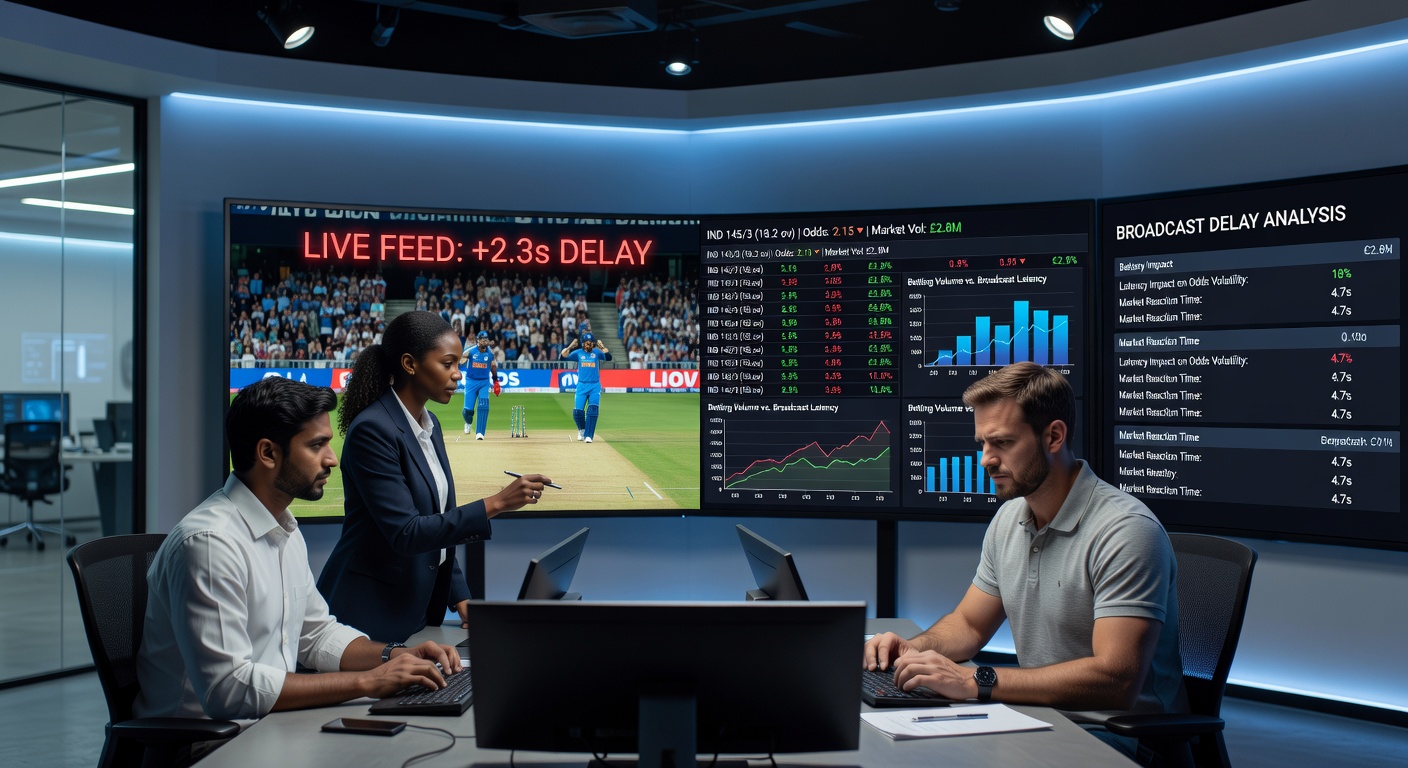
International cricket matches generate intense activity in live betting markets where every ball can shift odds on runs, wickets, and boundaries, yet broadcast delays introduce measurable gaps between actual events and the information reaching bettors. These delays, often ranging from three to eight seconds depending on the streaming platform and regional feed, create windows where market prices lag behind on-field developments. Analysts tracking data across multiple series note that such timing discrepancies affect in-play wagers more than pre-match markets because prices update continuously based on incoming information.
How Broadcast Delays Arise in Global Cricket Coverage
Production teams route live signals through satellite uplinks, encoding processes, and distribution networks before the footage reaches viewers, which introduces consistent latency compared with the real-time action captured by stadium cameras. Different platforms compound the issue because some services compress streams further for mobile users while others prioritize higher resolution at the cost of added seconds. Observers tracking feeds from the 2025-2026 season found that delays averaged 4.7 seconds on major streaming services during day-night matches, with occasional spikes above ten seconds when bandwidth fluctuated in high-traffic regions. These variations matter because betting exchanges and bookmakers adjust odds on the basis of the same delayed footage that reaches most participants.
Effects on In-Play Market Dynamics
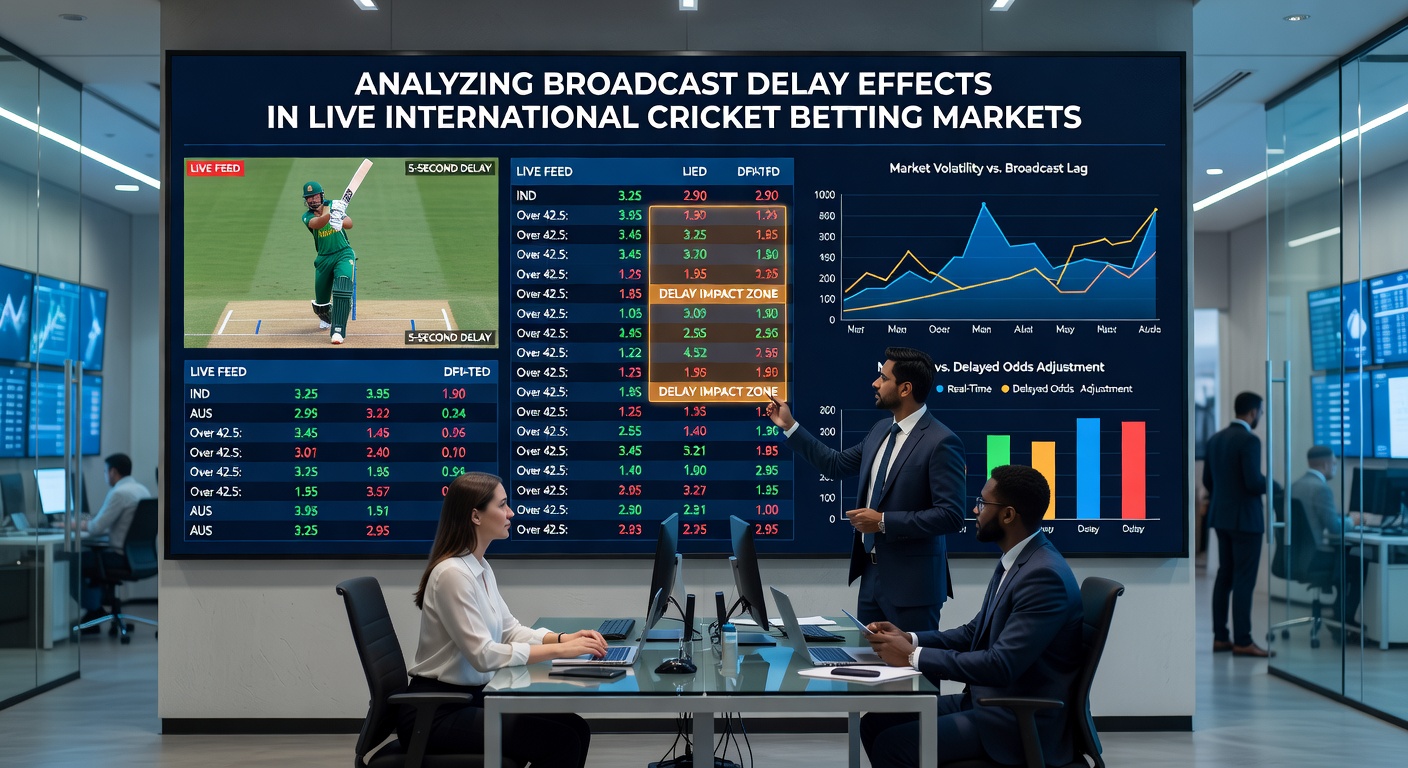
Live markets for next-over totals or batsman strike rates respond immediately once information arrives, but the interval between event and update allows faster participants to place wagers before prices fully reflect new conditions. Researchers examining transaction logs from several international limited-overs series documented clusters of large bets placed within the first two seconds after a boundary or wicket, followed by rapid price corrections once the broader market incorporated the outcome. The pattern repeats across time zones because participants in regions with shorter delays gain consistent edges over those relying on slower feeds. Data collected during bilateral series between Australia and South Africa in early 2026 illustrated that markets for run-rate props showed 12 percent higher volatility in the moments immediately after each ball when delay differentials exceeded five seconds.
Regional Variations and Platform Differences
Geographic location influences both the length of delays and the regulatory environment surrounding live betting. European operators often source feeds from primary broadcasters that add minimal extra processing, whereas some Asian and North American platforms route signals through additional servers to comply with local content rules. A report published by the Australian Institute of Sport in collaboration with the Cricket Australia analytics unit highlighted how delay lengths differed by as much as three seconds between domestic streaming services and international satellite packages during the same match. Bettors accessing multiple platforms simultaneously sometimes exploit these inconsistencies by monitoring the fastest feed available, although exchange rules in several jurisdictions prohibit the use of artificial timing advantages.
Cricket's stop-start nature amplifies the impact because pauses between overs and reviews create predictable moments when new information arrives in batches rather than continuously. Markets for the outcome of the next review decision, for instance, move sharply once the third umpire's signal reaches screens, yet the actual decision occurred seconds earlier inside the stadium. Figures released by the International Cricket Council technical committee in May 2026 showed that review decisions now average 1 minute 48 seconds from referral to announcement, during which live odds can shift multiple times based on delayed visual cues.
Measurement Approaches and Data Sources
Quantitative studies compare timestamps from official match logs against the moment each event appears on sampled streams, producing delay profiles for individual broadcasters. One ongoing project coordinated through the University of Melbourne's sports analytics group has compiled over 2,400 overs across 38 matches since late 2025, revealing that streaming services using adaptive bitrate technology exhibit greater variance in delay than traditional satellite transmissions. These datasets allow operators to model expected price drift and set internal risk parameters accordingly. Market participants who aggregate similar timing data across multiple events can identify periods when particular platforms consistently lag, creating repeatable windows for informed positioning.
Regulatory and Industry Responses
Governing bodies and betting operators have begun incorporating delay-aware protocols into their systems. The Australian Communications and Media Authority requires certain licensees to maintain records of feed latency for compliance audits, while equivalent bodies in Canada and the European Union examine similar transparency measures. Industry associations such as the European Gaming and Betting Association have circulated technical guidelines encouraging standardized latency reporting across member platforms. These steps aim to reduce information asymmetry without restricting the speed of legitimate market updates.
Conclusion
Broadcast delays remain an inherent feature of global cricket coverage that directly shapes the behavior of live international betting markets. Systematic measurement, regional platform comparisons, and evolving regulatory frameworks continue to clarify how these timing gaps influence price formation and participant strategies. As data collection expands through 2026 and beyond, clearer patterns emerge around which match situations and delivery methods produce the largest discrepancies, allowing all parties to operate with greater awareness of the underlying information flow.