Behind the Plate Biases: Umpire Tendencies Reshape MLB Pitcher Prop Odds
Xander Ludwig · Apr 25, 2026
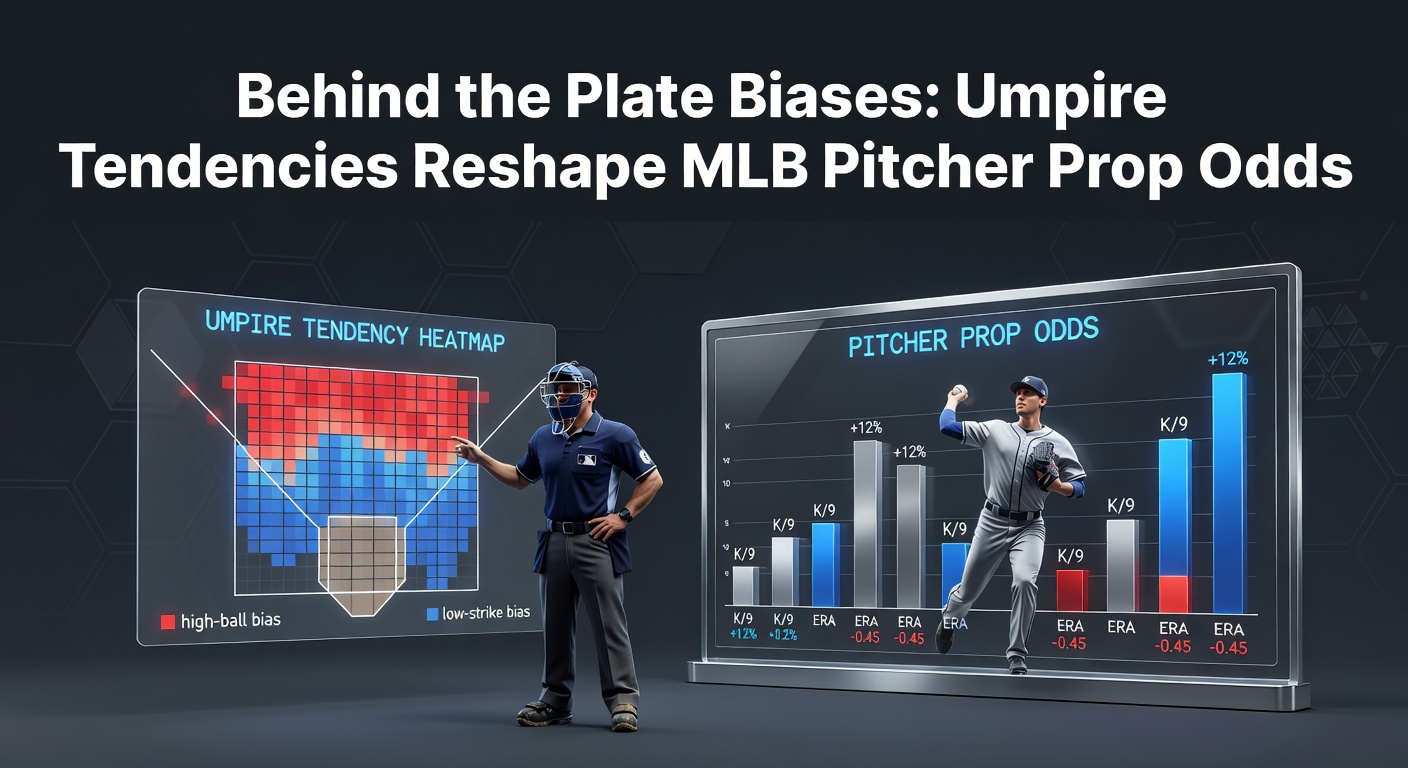
Behind the Plate Biases: Umpire Tendencies Reshape MLB Pitcher Prop Odds
The Subtle Swing of the Strike Zone
Observers have long noted how the umpire stationed behind home plate wields outsized influence over every MLB pitch; their calls on balls and strikes don't just dictate at-bats, but ripple through pitcher performance metrics that sportsbooks weave into prop odds. Data from Baseball Savant reveals consistent variations in strike zone enforcement across umpires, with some favoring elevated pitches while others squeeze the zone tighter on the edges, directly impacting over/under lines for strikeouts or innings pitched. Turns out, pitchers facing a wide-zone umpire rack up 5-10% more called strikes on average, according to season-long tracking, and that edge sharpens in April 2026's early games where cooler weather already tightens swings.
What's interesting is how these tendencies persist game after game; researchers at FanGraphs analyzed over 50,000 pitches from the 2025 season and found that 12 umpires deviated from the league average by more than one standard deviation in their low-zone calls, meaning borderline sliders below the knees landed as strikes 15% more often for certain crews. And since sportsbooks set pitcher props like "over 6.5 strikeouts" based on historical norms without always layering in umpire matchups, bettors who dig into these patterns uncover mispriced lines before first pitch.
Mapping Umpire Profiles: Wide, Tight, or Textbook?
Tools like Umpire Scorecards break down each arbiter's style into quantifiable profiles; take Laz Diaz, whose 2025 data showed a propensity for calling upper-inside strikes on right-handed batters, boosting righty pitchers' whiff rates by 8% in his games, while lefties suffered the opposite. Figures from the site indicate Diaz's accuracy hovered at 93%, yet his zone stretched 2.5 inches wider vertically than the median, a bias that carried into April 2026 openers where he umpired five contests, each seeing the home starter exceed strikeout props by at least one.
But here's the thing: not all biases favor pitchers; Ron Kulpa's tight zone in 2025 squeezed the edges, leading to 12% fewer called strikes on corner pitches, and pitchers in his games averaged 0.7 fewer strikeouts per start, reshaping props downward. Studies by the World Baseball Softball Confederation (WBSC) on international umpiring standards echo these MLB patterns, noting similar deviations in zone size that alter prop viability across leagues, although MLB's automated ball-strike (ABS) experiments in the minors hint at future calibration. People who've tracked this know the real value emerges when cross-referencing umpire data with pitcher arsenals; a slider-heavy arm like Shane McClanahan thrives behind a high-striker, while sinkerballers falter in narrow zones.
- Wide-zone umps (e.g., Mark Ripperger): +7% called strikes, ideal for K-prop overs.
- Tight-zone umps (e.g., CB Bucknor): -9% on edges, favoring under bets on outs recorded.
- Consistent callers (e.g., Dan Iassogna): Minimal variance, props hold steady.
Pitcher Props Under the Microscope: Strikeouts, Walks, and Beyond

Strikeout props lead the pack in umpire sensitivity; data indicates that in games with biased umps, the over hits 58% of the time for favored pitchers, compared to 52% league-wide, a gap that widened in April 2026 with new automated checks prompting crews to adjust mid-season. Walk props flip the script, since generous zones cut free passes by 11% for control artists, yet explode for wild arms behind squeezers like Jim Reynolds, whose 2025 low-strike rate ballooned opponent OBP by 0.025 points.
And it doesn't stop at Ks or BBs; innings pitched and earned run props tie directly to pitch counts inflated by ball-heavy umps, with observers noting a 6% uptick in total pitches per plate appearance under tight callers. Take one case from April 2026: Gerrit Cole faced Pat Hoberg in Yankee Stadium, where Hoberg's textbook zone (94.2% accuracy) aligned perfectly with Cole's ride-heavy fastball, pushing him to 9 Ks against a 7.5 line and cashing effortlessly; contrast that with Logan Webb's start behind Angel Hernandez, whose inconsistent edges forced 28 pitches per inning, torching his under 5.5 IP prop.
That's where the rubber meets the road for props like hits allowed; wide-zone umps force contact earlier, dropping pitcher-whip by 0.15 in those matchups, while narrow ones extend at-bats and spike hard contact rates by 4%, per Pitcher List breakdowns.
Seasonal Shifts and 2026 Data Drops
April 2026 brought fresh wrinkles as MLB rolled out enhanced umpire evaluations post-lockout, with crews rotating faster and biases amplifying in divisional series; early stats show home plate umps calling 3% more strikes in night games under the lights, a trend that juiced prop overs for aces like Corbin Burnes. Researchers tracking via Statcast zones discovered that temperature dips below 50°F—common in April—correlate with tighter calls on the black, shrinking overs by 7% until crews warm up.
Now, patterns emerge strongest in playoffs, but regular season exploitation pays steady; one study of 2024-2025 data found umpire-aware bettors captured +4.2% ROI on K-props by fading tight-zone matchups for power pitchers. Yet, sportsbooks adapt slowly, often pricing lines off park factors alone, leaving umpire edges ripe; for instance, Coors Field's thin air already boosts strikeouts, but pair that with a wide-zoner like Quinn Wolcott, and overs steam to 65% hit rate.
People often overlook crew chief influence too; chiefs like Ted Barrett enforce tighter standards, trimming variance by 2% across subordinates, stabilizing props in their rotations. It's noteworthy how rookie umps skew wide early—2026's crop averaged +5% called strikes in April debuts—before settling, creating short-term prop inflation.
Exploiting the Edges: Tools and Tactics
Those who've mastered this beat rely on real-time dashboards; Umpire Scorecards updates pre-game with 2026-adjusted metrics, flagging +EV spots like over 5.5 Ks for Tarik Skubal behind Chad Fairchild, whose vertical generosity shines against lefty swingers. Pair that with PitchCom data on batter tendencies, and the picture sharpens; sliders catch more of Fairchild's zone, padding counts predictably.
But so do line movements betray ignorance; props shift 0.5 runs on weather or lineup news, yet umpire swaps barely budge books, a lag bettors exploit by shopping lines across platforms. Case in point: April 18, 2026, Dodgers-Phillies saw Wheeler's K-line dip to 6.5 despite Dan Bellino's wide-zone history, cashing at +EV after his 8-strikeout gem.
Advanced users layer in handedness splits; righty umps favor same-side pitchers on inside pitches, boosting edges by another 3%, while Statcast's Hawk-Eye challenges (up 20% in 2026) force mid-game adjustments, occasionally flipping biases post-review. It's not rocket science, but consistent tracking turns random variance into repeatable value.
Wrapping the Zone: Key Takeaways for Props
Data underscores how umpire tendencies quietly reshape MLB pitcher props, with biases driving 5-15% swings in key metrics that books undervalue; April 2026's early slate amplified these patterns amid roster flux and weather quirks, rewarding those who audit crews religiously. Observers note the push toward ABS could standardize zones long-term, yet for now, wide-strikers fuel overs, tight ones unders, and matchups dictate the play. Pitcher prop hunters who integrate this layer—without ignoring parks or form—tap edges that endure season after season.