Charting Altitude Impacts on Endurance Metrics in CONCACAF Qualifiers
Freya Hansen · Aug 4, 2026
Charting Altitude Impacts on Endurance Metrics in CONCACAF Qualifiers
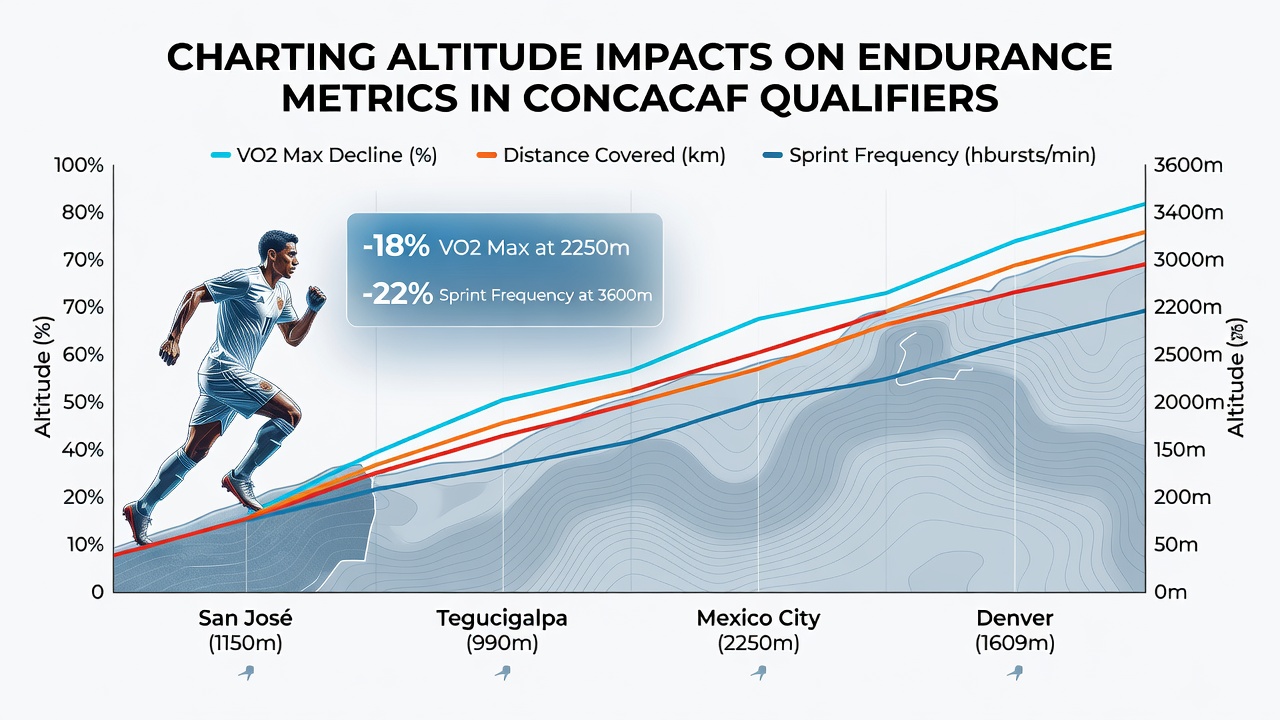
Altitude presents measurable challenges for endurance in CONCACAF qualifiers where venues sit well above sea level, and data from multiple cycles shows consistent drops in total distance covered alongside elevated heart rates during the second half of matches. Researchers tracking player metrics in Bolivia and Mexico have documented how reduced oxygen availability alters running patterns, recovery intervals, and overall work rate across full ninety-minute contests.
Physiological Responses at Elevation
Lower partial pressure of oxygen forces the body to compensate through increased ventilation and cardiac output, yet these adjustments come with higher energy costs that accumulate over the course of a game. Studies conducted by the Mexican National Institute of Sports Medicine indicate that players at 2,500 meters adn above experience a 10 to 15 percent reduction in maximal oxygen uptake compared with sea-level baselines, and this gap widens when matches extend into extra time. Heart-rate data collected via wearable devices reveals sustained elevations above 85 percent of maximum for longer durations, which correlates with quicker onset of fatigue in midfielders and fullbacks who cover the greatest cumulative distances.
CONCACAF qualifiers scheduled through the 2026 cycle continue to feature fixtures at Estadio Hernando Siles in La Paz and Estadio Azteca in Mexico City, both of which sit above 2,200 meters. Observers note that visiting teams from Caribbean and Central American nations show sharper declines in high-intensity running actions after the sixtieth minute, while home squads demonstrate partial adaptation through repeated exposure during domestic seasons.
Performance Data Across Recent Cycles
Analysis of GPS-tracked matches from the 2022 and 2026 qualification windows reveals that visiting teams average 8 to 12 percent fewer meters per minute in the final thirty minutes when playing above 2,000 meters. Figures compiled by the CONCACAF technical department and shared with member associations highlight that central defenders record the largest relative drop in sprint frequency, followed closely by attacking midfielders who rely on repeated accelerations. Recovery metrics, including heart-rate return times between bouts, lengthen by an average of 18 seconds per minute of play at altitude, according to data aggregated from national-team training camps.
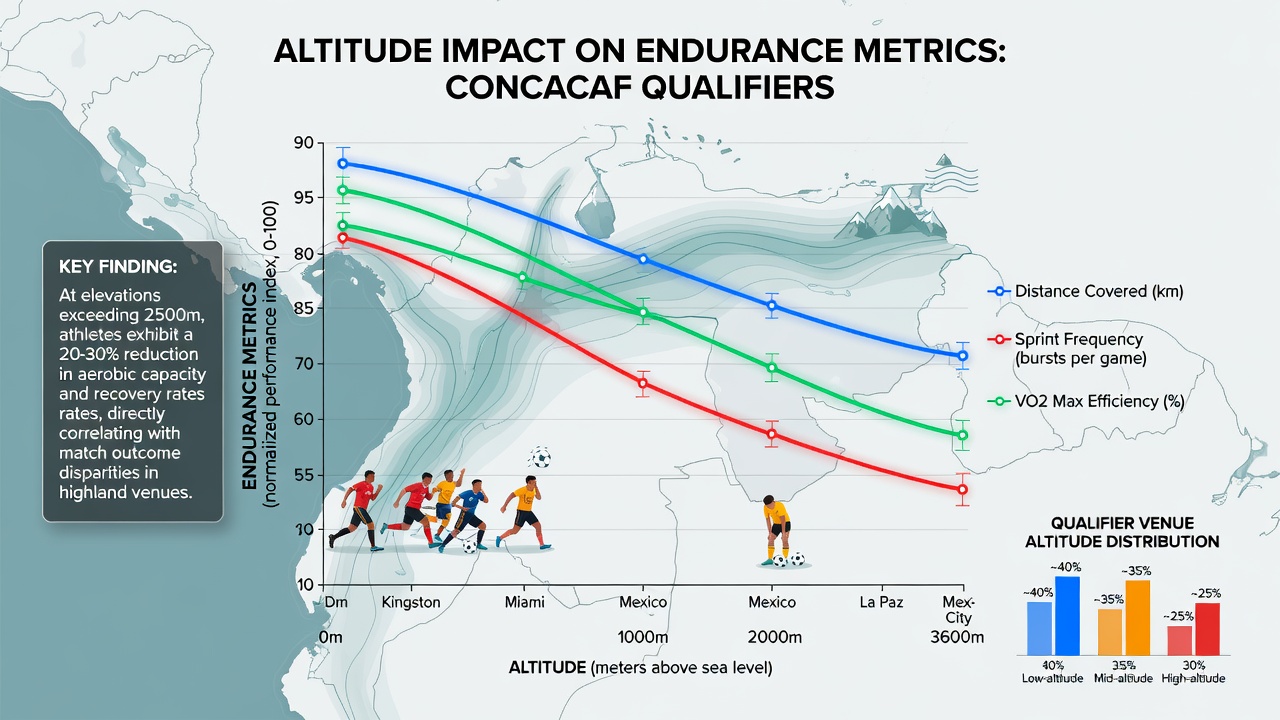
One study led by researchers at the University of Calgary examined Canadian national-team players during away qualifiers in Mexico and found that total distance covered fell from 10.8 kilometers at sea level to 9.4 kilometers at elevation, with the steepest decline occurring after halftime. Similar patterns appear in reports from the Pan American Health Organization’s sports-science working group, which tracked players from lower-lying nations across three qualification windows and confirmed that aerobic capacity adaptations require at least fourteen days of pre-acclimatization to blunt the endurance deficit.
Adaptation Strategies and Scheduling
National federations have adjusted preparation protocols ahead of the August 2026 qualifiers, incorporating simulated altitude tents and staged arrival timelines that allow gradual hematological changes. Teams arriving ten to twelve days early record smaller decrements in repeated-sprint ability than those arriving within seventy-two hours, data from the U.S. Soccer Federation’s performance lab shows. Coaches also modify in-game tactics by rotating wide players more frequently and shifting emphasis toward shorter passing sequences that reduce the need for sustained high-speed running.
Substitutions patterns shift accordingly, with an increase in the use of fresh legs in the sixty-fifth minute rather than the eightieth, reflecting earlier recognition of accumulating fatigue. GPS and heart-rate monitoring during training sessions at altitude further allows medical staff to set individualized thresholds that trigger earlier interventions before performance drops become statistically significant.
Future Measurement Tools
Emerging wearable technology now captures additional variables such as muscle-oxygen saturation and respiratory rate in real time, providing finer resolution on how altitude stress distributes across positional groups. CONCACAF technical reports scheduled for release after the 2026 cycle are expected to include comparative datasets from both home and away perspectives, enabling associations to refine travel and acclimatization guidelines. These evolving datasets continue to shape preparation standards across the confederation.
Conclusion
Altitude remains a quantifiable variable that alters endurance metrics in CONCACAF qualifiers, and ongoing data collection continues to refine understanding of its effects on player output. Continued integration of physiological monitoring with tactical adjustments offers measurable pathways for mitigating performance declines at elevation.