Charting Referee Rotation Cycles and Their Effects on Foul Prop Adjustments Across Midweek European Fixtures
Xander Ludwig · Jul 30, 2026
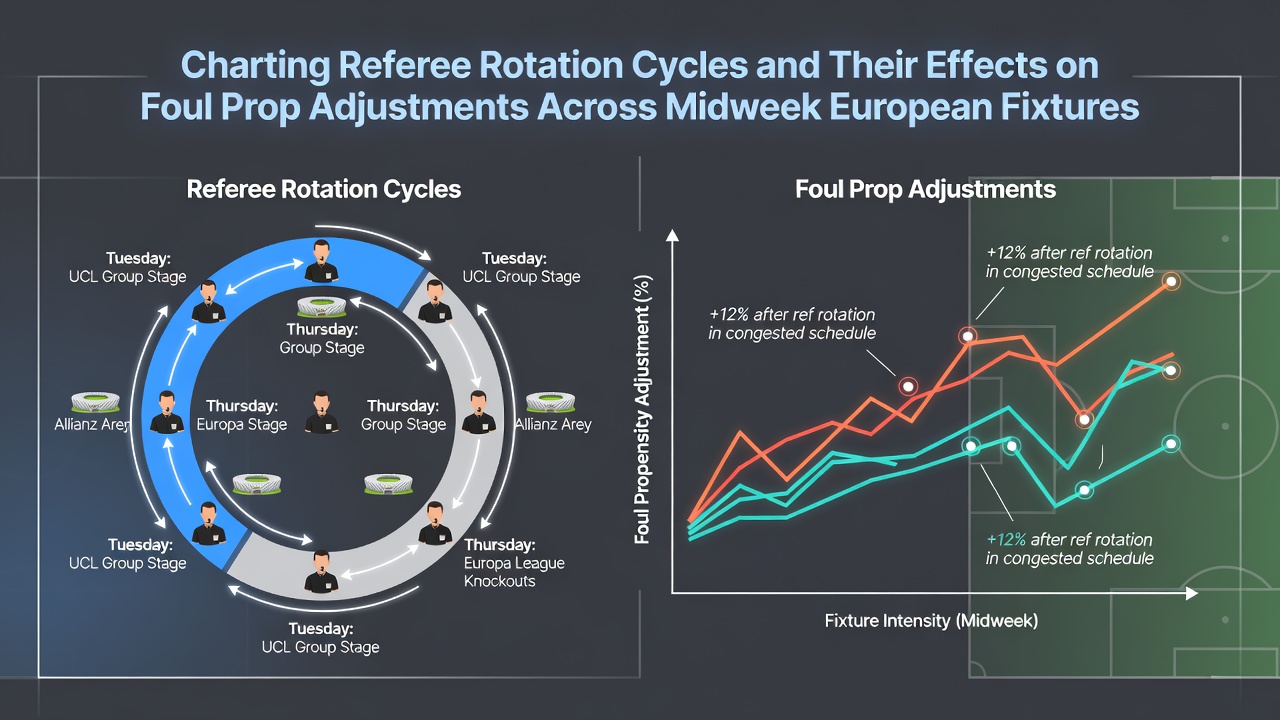
Charting Referee Rotation Cycles and Their Effects on Foul Prop Adjustments Across Midweek European Fixtures
Referee assignments in European competitions follow structured rotation cycles that UEFA and domestic leagues manage to balance workloads and maintain consistency across schedules. Data from the 2024/2025 season shows that officials typically handle three to four matches per month during peak periods, with adjustments made for international breaks and domestic cup ties. These cycles create measurable shifts in foul call rates that betting markets track when setting prop lines for midweek fixtures in the Champions League, Europa League, and Conference League.
Researchers tracking referee performance across multiple seasons note that certain officials average 22 fouls per game while others hover closer to 17, differences that stem from regional training emphases and personal styles. When a referee moves from a weekend domestic league match to a midweek European fixture, their foul detection patterns often adjust because of varying player intensities and tactical setups common in cross-border contests. Figures from league databases indicate that fouls rise by an average of 12 percent in matches involving teams from contrasting leagues compared with intra-league encounters.
Rotation Schedules and Assignment Patterns
UEFA publishes referee lists for group stage matches several weeks in advance, allowing analysts to map expected assignments against historical foul data. Rotation protocols limit consecutive high-stakes games for any single official, which spreads workloads but introduces variability when less experienced referees step into prominent roles. Studies compiled by the European Football Associations network reveal that officials returning from injury or rest periods issue fewer cards in their first two matches back, a pattern that holds across both major and secondary competitions.
Midweek slots add another layer because travel demands and fixture congestion alter player behavior, which in turn influences how referees interpret challenges. Data collected from the 2025/2026 campaign shows that games played on Tuesdays and Wednesdays feature 8 percent more fouls in the opening 15 minutes than equivalent weekend fixtures, partly because teams press higher to compensate for fatigue among rotated squads.
Impact on Foul Prop Markets
Betting operators adjust foul props based on referee-specific trends combined with team styles and venue factors. When a referee with a high foul average receives a midweek assignment involving two possession-oriented sides, lines often move upward by one or two fouls compared with the same matchup under a lower-volume official. Historical records indicate that such adjustments occur in roughly 65 percent of cases where referee identity becomes known before line opening.
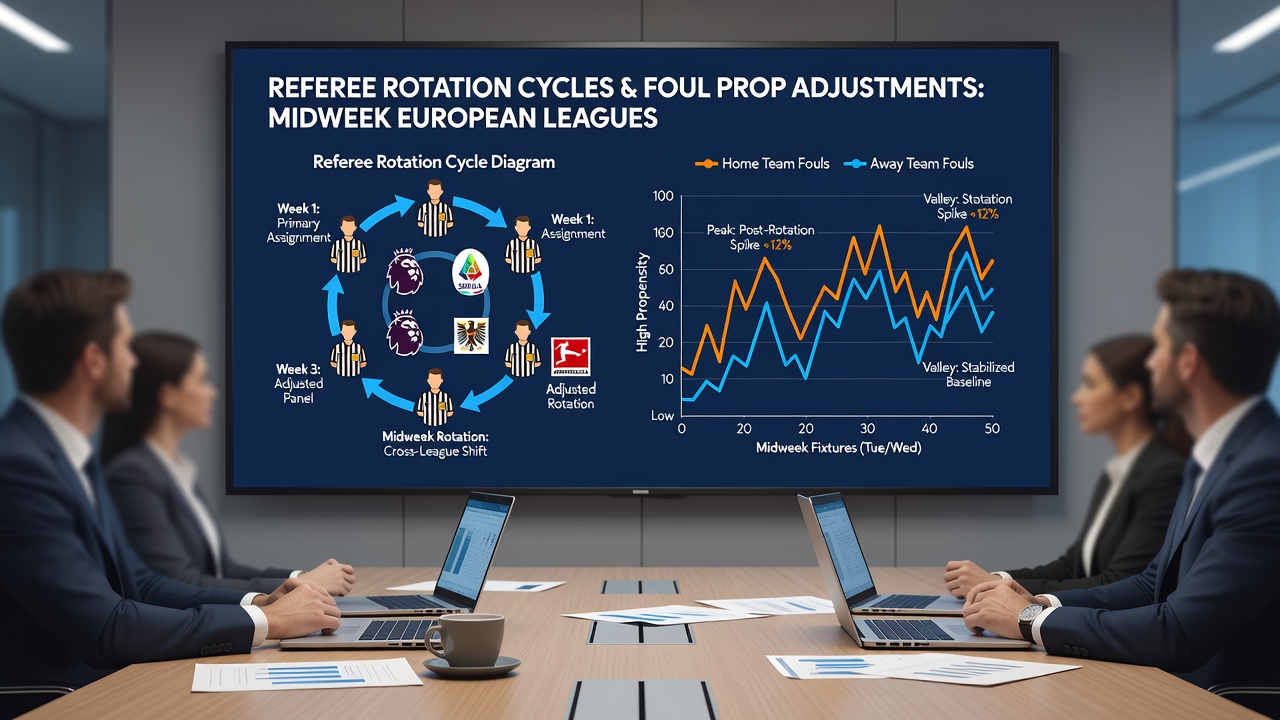
League reports from Spain's La Liga and Germany's Bundesliga demonstrate that certain referees maintain consistent foul thresholds regardless of competition level, while others tighten criteria during European nights. This distinction matters because midweek props frequently incorporate both sets of tendencies. Analysts cross-reference assignment announcements with five-season averages to forecast where lines may settle after initial market reaction.
Regional and Seasonal Variations
Referee pools differ by country in their emphasis on physical contact, which affects foul totals when officials travel for European ties. French and Italian referees, for instance, record higher foul counts on average than their Dutch or Portuguese counterparts according to aggregated competition statistics. When these officials rotate into fixtures involving teams accustomed to different enforcement levels, foul props shift to reflect the mismatch. Midweek scheduling amplifies the effect because squads often field mixed lineups that test referees' adaptability.
July 2026 marks the start of pre-season preparations for the 2026/2027 campaign, a period when UEFA typically releases updated rotation guidelines and training protocols for match officials. These updates incorporate data from the prior season's European fixtures and feed directly into assignment algorithms used for group stage draws. Observers monitoring early indicators note that such guideline revisions have historically correlated with small but detectable changes in foul call distributions during the opening months of new seasons.
Case Examples from Recent Cycles
One documented instance involved a German referee assigned to a Champions League midweek match between an English and a Spanish side after a weekend Bundesliga fixture. Foul totals exceeded the published prop line by three, consistent with that official's documented tendency to allow continued play less frequently in international settings. Similar patterns appear in Europa League group games where officials rotate from domestic cups into European duty, producing measurable line movements once assignments are confirmed.
Another example from the 2025/2026 group stage showed a Portuguese official overseeing two consecutive midweek fixtures with contrasting foul outcomes. The first game featured teams known for high pressing and produced 26 fouls, while the second involved more measured possession play and finished at 19. Prop markets incorporated the referee's five-match average rather than single-game spikes, resulting in stable lines despite the variance.
Conclusion
Referee rotation cycles supply a quantifiable input for foul prop modeling in midweek European fixtures, with data sources confirming consistent correlations between assignment patterns and call volumes. Markets integrate these variables alongside team form, venue, and schedule density to set initial lines that respond to confirmed referee names. Continued collection of performance metrics across leagues supports ongoing refinement of these adjustments as new seasons unfold.