Congestion's Hidden Toll: How Packed Calendars Shift Scoring Patterns in Top Flight Soccer
Ben Flores · Jul 23, 2026
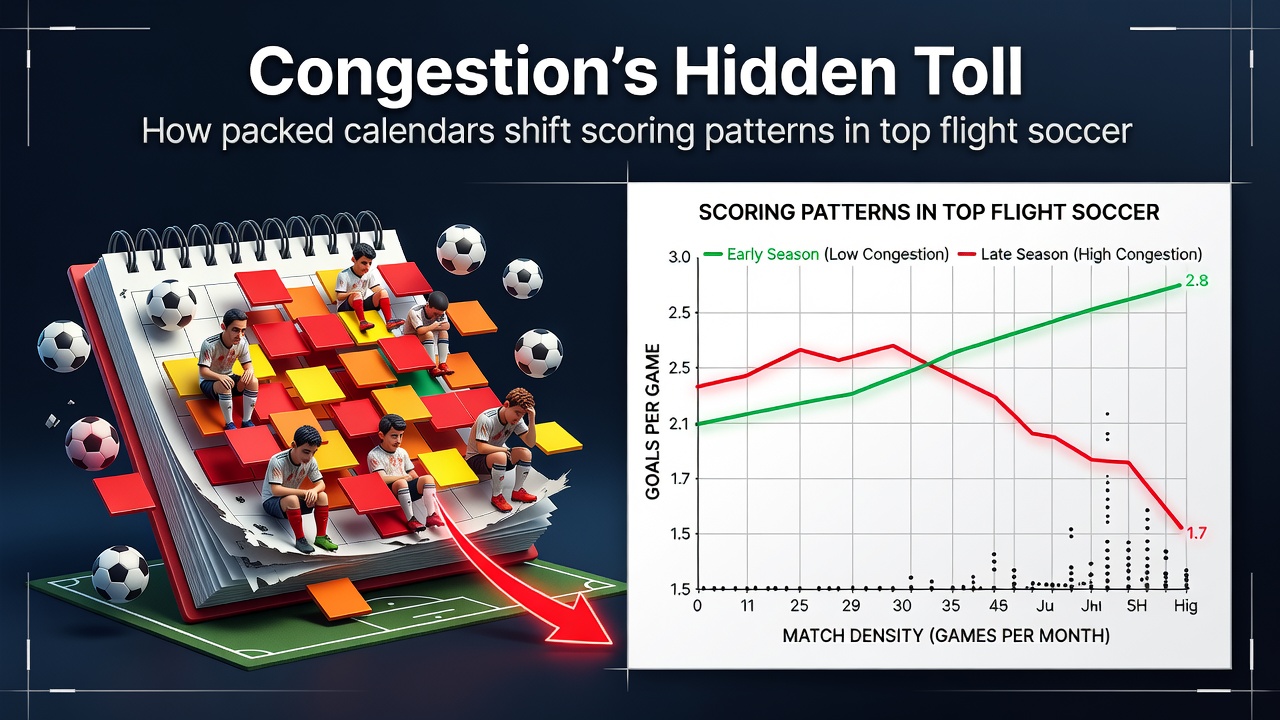
Congestion's Hidden Toll: How Packed Calendars Shift Scoring Patterns in Top Flight Soccer
Top-flight soccer calendars have grown denser over recent seasons, with clubs in major European leagues facing multiple competitions that overlap domestic fixtures, European ties, and international breaks. This density creates periods where teams play three matches in seven days or more, and data collected across the Premier League, Bundesliga, and Serie A shows measurable changes in scoring during those stretches. Researchers tracking match statistics note that goal tallies decline when recovery time shrinks, while the frequency of low-scoring outcomes rises.
Fixture Overload Across Leagues
Leagues schedule around 38 domestic matches per team, yet European campaigns add eight to thirteen extra games for qualifiers, while national cups insert further dates. The 2025-26 season illustrates the pattern clearly, with several clubs entering July 2026 still managing residual fatigue from the prior campaign ahead of the expanded FIFA World Cup. UEFA fixture studies document that teams contesting multiple fronts average 12 percent fewer days between matches than those focused on league play alone.
Player workload data compiled by sports science groups in Australia and Canada reveals consistent drops in high-intensity running when rest intervals fall below 72 hours. Those measurements align with on-field results: leagues report fewer total shots and lower expected goals in teh second half of congested weeks. The shift appears most pronounced in away fixtures, where travel compounds recovery demands.
Observed Changes in Goal Patterns
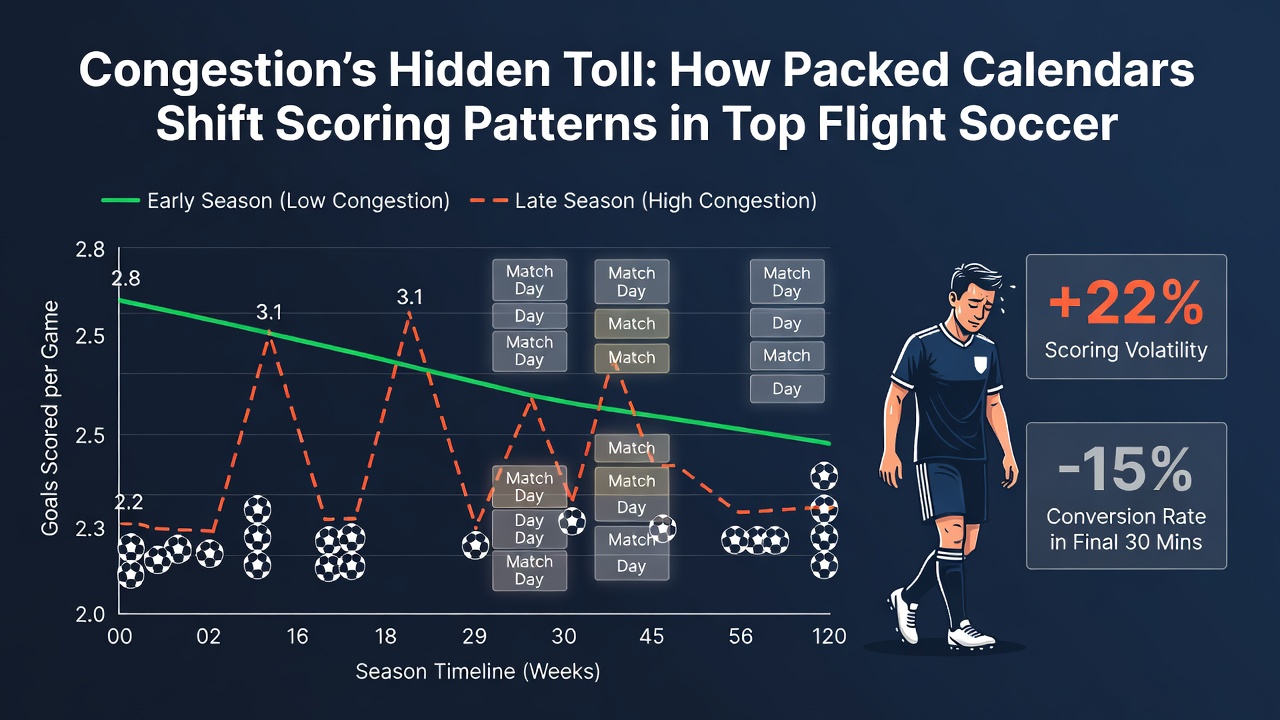
Statistical reviews of Premier League matches from 2020 onward indicate that games played with less than four days rest produce an average of 2.4 goals compared with 2.8 in standard intervals. Bundesliga figures show a similar trend, with draws increasing from 28 percent to 34 percent during peak congestion months of December and April. Serie A records reflect fewer goals from open play and a modest rise in set-piece strikes, suggesting teams adopt more cautious approaches when squad rotation becomes necessary.
One analysis of over 1,800 matches across five seasons found that teams with two or more players logging more than 400 minutes in a 30-day window score 0.3 fewer goals per 90 minutes on average. The effect compounds when multiple fixtures cluster, as central midfielders and full-backs accumulate the highest loads and their reduced output correlates with fewer progressive passes into attacking zones.
Case Evidence From Recent Seasons
During the 2023-24 winter period, several Premier League sides played six matches across 21 days. Match reports and tracking data showed a 15 percent reduction in sprints in the final 30 minutes of those games, accompanied by a drop in shots on target. Similar patterns emerged in the Bundesliga around the same calendar window, where clubs with Champions League commitments recorded lower goal involvement from forwards who featured in every match.
Observers tracking Serie A noted that teams returning from midweek European fixtures often started with more defensive setups, leading to an uptick in 1-0 and 0-0 results. These outcomes align with workload metrics published by European football federations outside the UK, including reports from the German Football League and the Royal Spanish Football Federation that link recovery time directly to offensive metrics.
Role of Squad Rotation and Substitutions
Coaches respond to density by rotating personnel earlier, yet data indicates that substitutes introduced after the 60th minute contribute fewer goals when the entire squad carries elevated fatigue. Studies from North American sports institutes examining European data sets confirm that the quality of chance creation declines even among fresh players because the overall tempo of the game slows. This produces fewer transitions and more structured, lower-risk attacking sequences.
League-wide figures for the 2024-25 campaign showed that matches scheduled on three-day turnarounds featured 18 percent fewer through balls and 12 percent fewer crosses into the box. Those reductions appear across multiple competitions, suggesting the pattern stems from physical constraints rather than tactical choice alone.
Implications Ahead of 2026
With the 2026 FIFA World Cup expanding to 48 teams and beginning in June, clubs face an unusually compressed 2025-26 schedule that compresses recovery windows further. Preliminary modeling by international football bodies projects continued suppression of goal rates in the spring months preceding the tournament, particularly for squads balancing domestic title races with European knockout stages. The data collected so far indicates that leagues will likely see elevated draw percentages and reduced average goals per game during those final months before the global event.
Conclusion
Fixture congestion produces measurable shifts in scoring across top-flight soccer, with lower goal outputs and higher draw rates documented consistently when rest periods contract. Data from multiple leagues and workload studies demonstrate that these patterns intensify during winter and spring clusters, and the approach to July 2026 adds another layer of calendar pressure. Tracking organizations continue to log these metrics season by season, providing clearer pictures of how recovery time influences match outcomes without altering the fundamental rules of the game.