Deciphering market reactions to coaching changes in european soccer leagues
Xander Keller · Aug 20, 2026
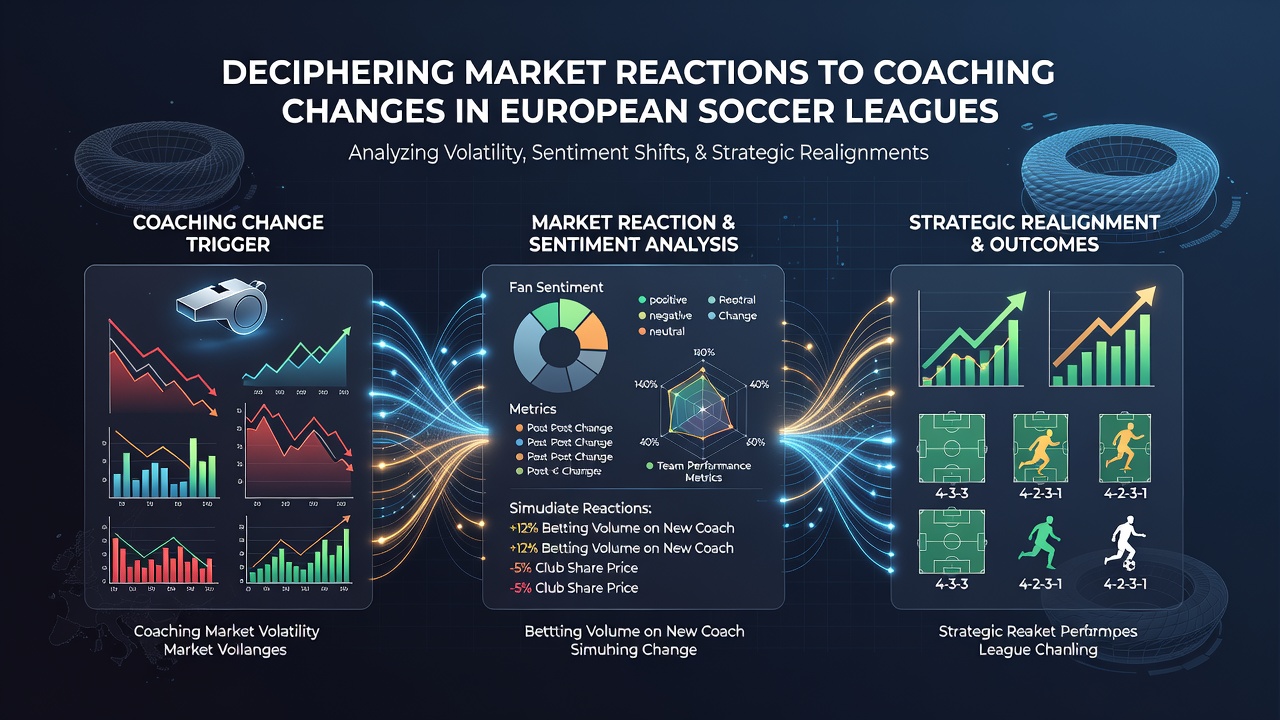
Deciphering market reactions to coaching changes in european soccer leagues
Coaching changes in European soccer leagues trigger immediate shifts across betting markets, with odds compilers and traders adjusting lines based on incoming manager profiles, club financial stakes, and historical performance data. Observers note that these adjustments often begin within hours of announcements, reflecting both expected tactical overhauls and the pressure on new appointees to deliver results quickly. Data from recent seasons shows that markets price in higher goal expectations when attacking-minded coaches take over relegation-threatened sides, while defensive specialists tend to compress over/under totals in the short term.
Patterns Across Major Leagues
Premier League reactions differ from those in Serie A or Ligue 1 because of greater media scrutiny and larger global betting volumes. Researchers tracking five-year windows found that English clubs replacing managers mid-campaign experience an average 12 percent swing in match-winner odds within the first three fixtures. Bundesliga clubs, by contrast, see more stable lines because squad depth and youth integration often blunt the impact of a single appointment. La Liga markets incorporate additional variables around financial fair play constraints, which can mute or amplify price movements depending on the new coach’s transfer history.
August 2026 brought several pre-season transitions across the continent, with clubs finalizing staff ahead of the new campaign and markets incorporating those decisions into early futures pricing. Italian sides entering the window with interim coaches saw Serie A title odds lengthen measurably, while Bundesliga outfits appointing established tacticians experienced tighter spreads on both win totals and European qualification bets.
Betting Market Mechanics
Bookmakers rely on a combination of statistical models, trader intuition, and real-time liability management when recalibrating prices after a dismissal. Early lines often widen because of uncertainty over training-ground influence and dressing-room dynamics. Once the first match under the new regime occurs, data feeds allow sharper adjustments; goal-line markets typically tighten faster than player-prop markets because team-wide metrics stabilize quicker than individual output. According to a study published by the University of Amsterdam’s sports economics group, markets reach equilibrium within four to six matches on average, though outliers persist when the incoming coach alters set-piece routines or pressing triggers.

Those who monitor limit movement note that sharp action frequently arrives from syndicates with access to proprietary training data or insider schedules. Such flows push Asian handicap lines before public money arrives, creating temporary inefficiencies that later correct. European regulatory filings from the Malta Gaming Authority indicate that liability caps on single matches sometimes force early line closures, particularly when a high-profile appointment coincides with a televised fixture.
Case Examples and Data Points
One Bundesliga club replacing its manager after a poor autumn run saw over-2.5-goal odds drop from 1.95 to 1.72 within 48 hours, driven by the new coach’s documented preference for high-pressing systems. In contrast, a La Liga side appointing a defensively oriented replacement experienced a widening of the same market as traders anticipated lower scoring outputs. Figures released by the French Football Federation show that Ligue 1 coaching changes produce the largest variance in clean-sheet betting because French squads often rely on individual defensive organization rather than collective structure.
Academic papers examining transfer-window timing reveal that summer appointments generate steadier market responses than winter changes, largely because squads can be reshaped before the next campaign begins. Winter hires, however, force immediate tactical compromises that betting models struggle to capture until match footage accumulates.
External Factors Influencing Reactions
Ownership structures, transfer budgets, and fixture difficulty all modulate how markets digest news. Clubs owned by investment groups with long-term project horizons tend to produce muted initial swings because the appointment aligns with multi-year planning. Conversely, owner-driven dismissals at clubs facing relegation often generate exaggerated short-term price movements that later retrace once results stabilize. Weather, travel, and international breaks further complicate short-term modeling, leading traders to widen margins until clearer data emerges.
Industry reports from the European Club Association highlight that communication strategies around appointments also matter; clubs issuing detailed tactical briefs alongside announcements reduce uncertainty and therefore limit volatility in both match-winner and total-goals markets.
Conclusion
Market reactions to coaching changes follow observable patterns shaped by league characteristics, timing, and supporting data sources. Traders incorporate historical benchmarks, tactical profiles, and liability considerations when setting new lines, while sharp money and public flows determine how quickly equilibrium returns. Observers tracking these dynamics across the 2026-2027 season continue to monitor how August adjustments influence early campaign pricing in each major European competition.