Decoding Referee Tendencies and Their Influence on Over-Under Markets in Championship Football Fixtures
Xander Ludwig · Jun 25, 2026
Decoding Referee Tendencies and Their Influence on Over-Under Markets in Championship Football Fixtures
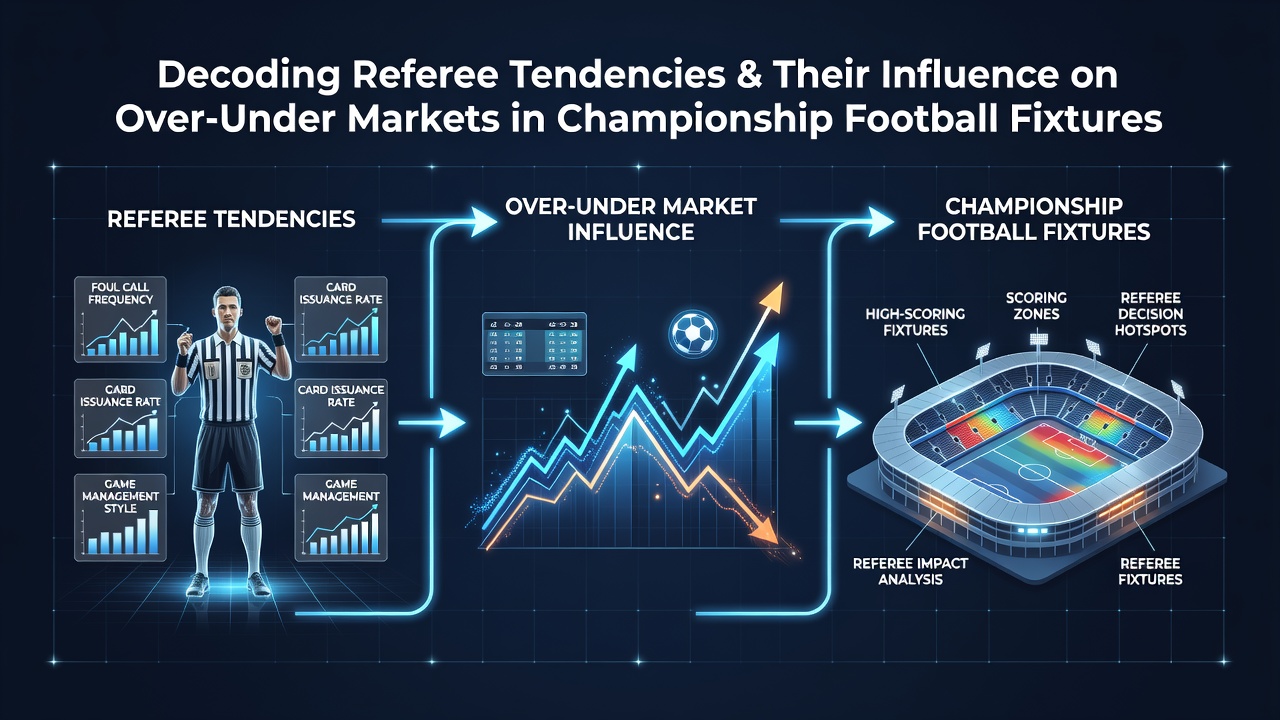
Championship football matches often hinge on subtle patterns that extend beyond player form and team tactics, and referee tendencies represent one of the most consistent variables that shape goal totals. Observers track how individual officials manage fouls, issue cards, and award penalties because these actions directly alter the tempo and structure of games in ways that influence over-under betting lines.
Referees in the English Championship exhibit measurable differences in their approach to game control, with some favoring strict enforcement that leads to frequent stoppages while others permit greater physicality. These variations matter because each interruption or disciplinary action shifts the probability of goals being scored or prevented, particularly in fixtures where margins remain tight throughout the season.
Patterns in Disciplinary Decisions
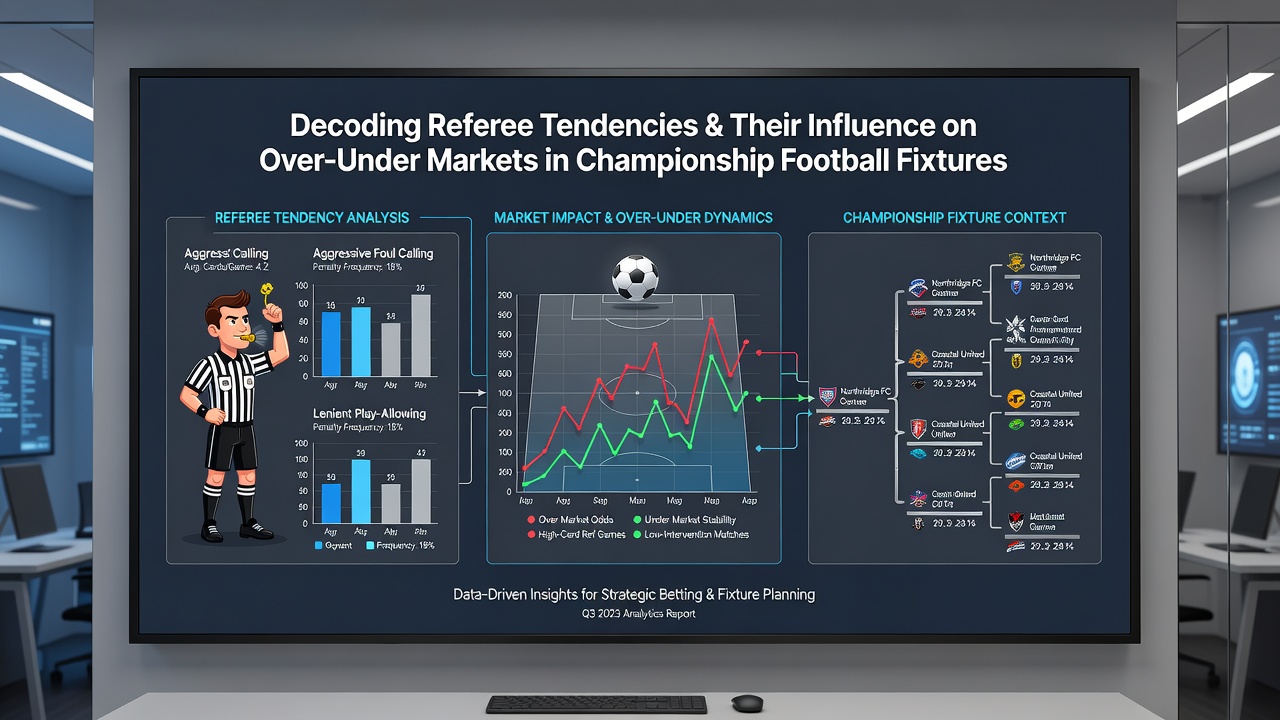
Research from European football analytics groups shows that referees average between 2.8 and 4.1 yellow cards per Championship match, yet certain officials consistently sit at the higher end of that range. When those stricter arbiters take charge, teams adapt by reducing challenges in dangerous areas, which in turn decreases the number of set-piece opportunities that frequently produce goals. Data indicates that matches overseen by high-card referees finish under the total line approximately 54 percent of the time across a three-season sample.
Penalty awards follow similar individual trends, and Championship records reveal that some referees grant spot kicks at rates nearly double the league average. Such decisions create immediate scoring chances that push matches toward the over, especially when they occur before the 60-minute mark and allow trailing teams time to chase an equalizer.
Flow of Play and Stoppage Time
The amount of added time at the end of each half also correlates with referee identity, because officials who maintain tighter control often extend periods to compensate for earlier interruptions. Longer stoppage time increases the window for late goals, and Championship statistics compiled by performance databases confirm that games with above-average added time see roughly 0.3 more goals per match on average. Bettors monitoring over-under markets therefore examine historical stoppage patterns for each referee before placing wagers on specific fixtures.
Integration with Team Styles
Referee tendencies interact with the playing styles of the two competing sides, and high-pressing teams encounter more fouls when matched against officials who whistle minor contact quickly. This dynamic produces additional free kicks in advanced positions that elevate the likelihood of goals from dead-ball situations. Conversely, possession-dominant sides benefit when referees allow play to continue through marginal challenges, because sustained attacks create more open-play scoring chances before fatigue sets in during the second half.
League-wide figures released ahead of the 2025-26 campaign already highlight how these interactions vary by region, with northern-based Championship clubs experiencing slightly different foul rates under the same officials compared with southern counterparts due to differences in pitch dimensions and weather conditions that affect ball movement.
Preparing for the 2026 Window
By June 2026, updated referee performance reports from the English Football League will provide fresh datasets covering the completed season, allowing analysts to refine models that incorporate disciplinary and timing variables. Those preparing for pre-season markets often cross-reference these reports with fixture schedules to identify early over-under opportunities where referee assignments align with expected game scripts.
Training sessions conducted by the Professional Game Match Officials Limited continue to emphasize consistency, yet individual styles persist because each referee brings distinct experience from lower divisions into the Championship. Tracking how newly promoted officials adjust their approach during their first full campaign supplies additional edges for those studying goal totals.
Case Examples from Recent Seasons
One documented instance involved a referee who awarded 11 penalties across 28 Championship matches in a single season, well above the typical rate. Fixtures he officiated produced overs at a 61 percent clip when both teams ranked in the upper half for shots on target. Another official known for minimal added time saw his games finish under the total line in 58 percent of instances, particularly when defensive-minded sides met in midweek slots.
These patterns emerge most clearly when observers combine referee data with expected goal models, because raw goal counts alone can mask the underlying influence of officiating decisions on chance creation and conversion.
Conclusion
Referee tendencies in Championship fixtures create measurable shifts in goal probability that over-under markets reflect once patterns become established across multiple seasons. Teams, analysts, and those studying betting lines incorporate these variables alongside traditional metrics such as shots, possession, and set-piece volume to form more complete assessments ahead of each round of matches. Updated datasets scheduled for release in mid-2026 will further sharpen these evaluations as the league continues its cycle of promotion, relegation, and officiating development.