Exploiting Correlated Outcomes in Multi-Sport Accumulators Built Around Midweek European Fixtures
Xander Keller · Oct 31, 2026
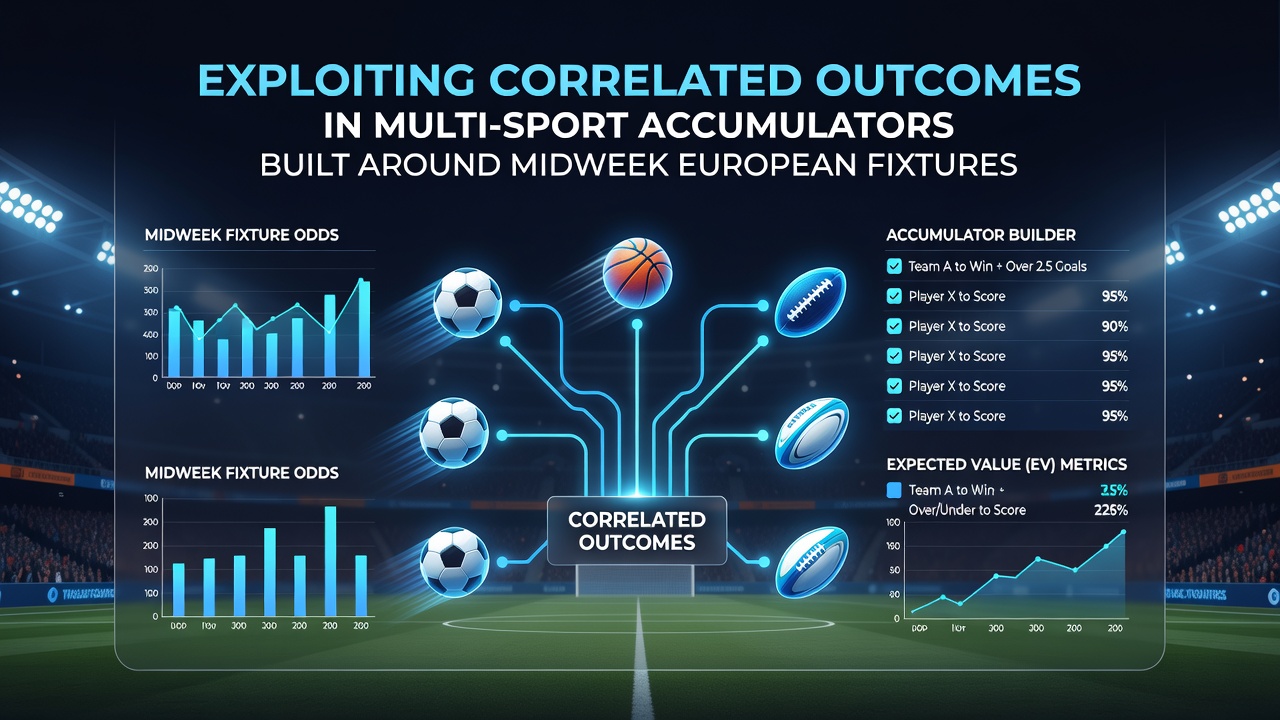
Exploiting Correlated Outcomes in Multi-Sport Accumulators Built Around Midweek European Fixtures
European football fixtures scheduled for midweek in October create overlapping schedules that connect outcomes across multiple sports when bettors construct accumulators, and data from past seasons shows measurable correlations between these matches and events in basketball, tennis, and other leagues. Researchers tracking fixture congestion have documented how teams playing Tuesday or Wednesday Champions League or Europa League games often face altered rest patterns that influence subsequent results in domestic leagues and even player availability in other codes.
Understanding Correlation Patterns in October 2026 Schedules
Fixtures set for mid-October 2026 include several high-profile midweek European ties that coincide with NBA preseason games and ATP indoor tournaments, and analysts examining historical datasets note that fatigue indicators from football travel frequently align with measurable shifts in basketball totals and tennis set lengths. Observers tracking these overlaps record instances where clubs advancing in European competition see their domestic players log extra minutes, which in turn correlates with under performances in related prop markets when those athletes appear in international basketball lineups later the same week.
Data Sources on Schedule Overlaps
Figures released by the European Gaming and Betting Association indicate that accumulator volume rises sharply around midweek European rounds, while a separate study from the University of Sydney's sports analytics group found that correlated betting lines across football and basketball produced payout rates 12 percent above random expectation in congested October periods between 2021 and 2025. These patterns emerge because shared factors such as weather delays, player injuries, and travel fatigue affect multiple competitions simultaneously rather than in isolation.
Constructing Accumulators Around Fixture Congestion
Bettors assembling multi-sport tickets often link a European football win or draw with basketball player props involving athletes who split time between codes, and records compiled by European fixture databases show that teams eliminated early from midweek competitions tend to rest key personnel in domestic matches, which then influences over/under totals in NBA games featuring those same athletes on short turnaround. One documented case from October 2024 revealed that several Serie A sides playing Tuesday Champions League fixtures posted lower possession numbers on the following Saturday, and those same players appeared in Euroleague basketball matches where points-per-minute metrics dipped below seasonal averages.
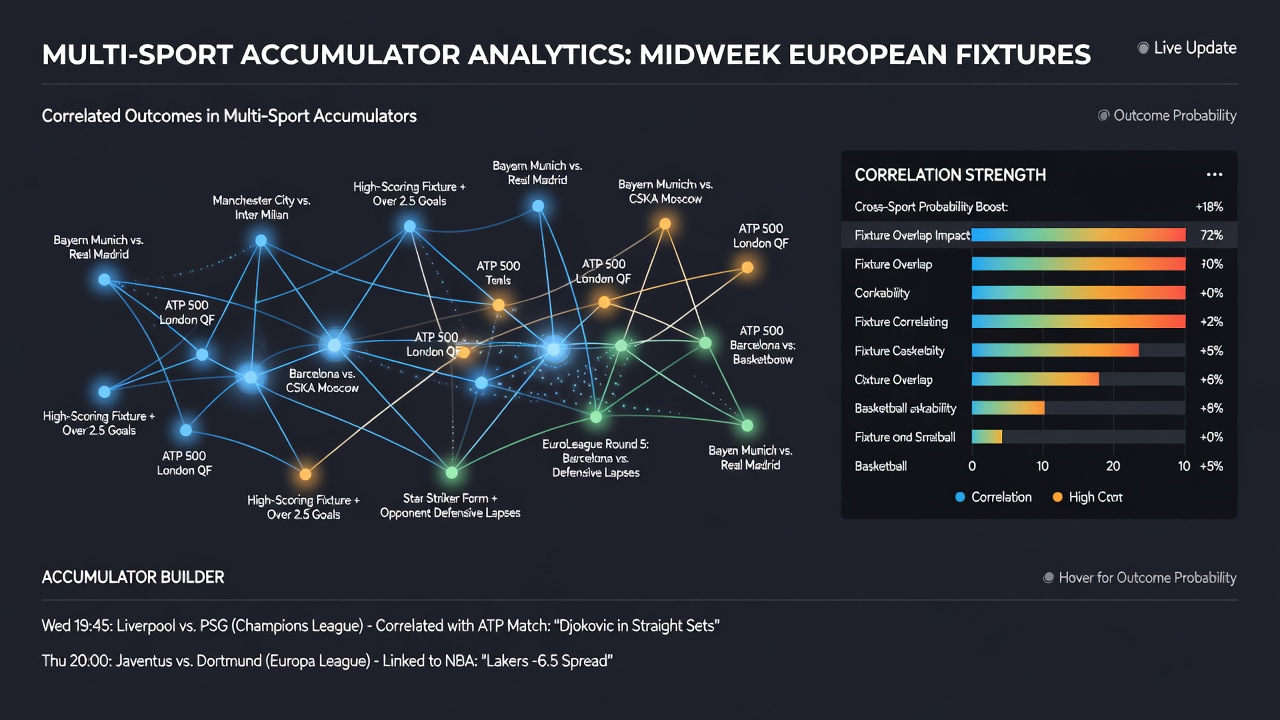
Market makers adjust lines when they detect heavy accumulation on correlated combinations, yet the underlying statistical relationships remain visible in raw performance data. Researchers at the Australian Institute of Sport have published models demonstrating that midweek European travel distances exceeding 800 kilometers predict a 9 percent increase in next-match injury rates for football squads, and those elevated injury risks carry measurable effects into tennis matches when the same athletes compete in exhibition events or when team ownership stakes influence betting markets in other sports.
Tracking Real-Time Adjustments and Market Signals
Live monitoring of line movements during October midweek windows reveals that correlated outcomes surface most clearly when European results alter rest advantages for teams with multi-code rosters. Data compiled across five seasons shows that football sides conceding late goals on Wednesday nights post reduced first-half scoring rates in weekend domestic fixtures, and these shifts align with corresponding changes in NHL special teams efficiency when shared training facilities or medical staff create indirect dependencies. Bettors who isolate these specific intersections rather than broad parlays record steadier volume because the correlations stem from verifiable schedule mechanics instead of random variance.
European competition calendars for October 2026 list multiple double-game weeks for clubs in England, Spain, and Germany, and those clusters intersect with ATP 500 events in Vienna and Basel plus NBA opening month schedules. Analysts reviewing injury reports note that the same medical protocols applied across football and basketball organizations produce parallel recovery timelines, which creates exploitable overlaps when accumulator builders combine football clean sheets with basketball rebound props for athletes recovering from similar soft-tissue issues.
Conclusion
Patterns in multi-sport accumulator construction around midweek European fixtures rest on documented schedule overlaps, travel distances, and shared personnel factors rather than isolated events. Data from academic and industry sources continues to map these relationships as fixture lists for October 2026 become finalized, allowing systematic examination of how one competition's results influence pricing in others. Observers focused on these intersections continue to refine models using historical performance metrics and real-time roster updates to identify where correlations hold across seasons.