Exploring Crowd Size Fluctuations and Their Effect on Total Goals Pricing in Scottish Premiership Encounters
Freya Hansen · Jun 27, 2026
Exploring Crowd Size Fluctuations and Their Effect on Total Goals Pricing in Scottish Premiership Encounters
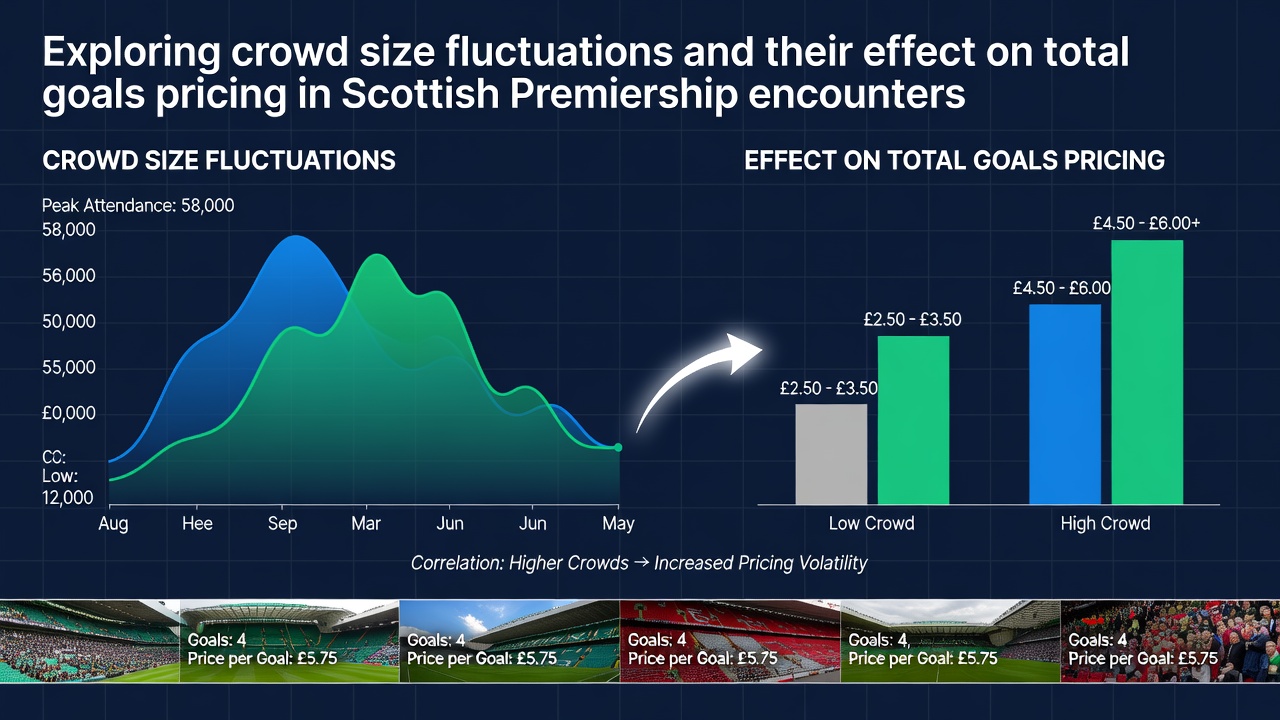
Scottish Premiership matches often see attendance figures swing sharply from one fixture to the next, and those shifts align with measurable changes in total goals output according to league records compiled through the 2025-26 campaign. Observers note that larger crowds tend to coincide with higher-scoring encounters while smaller turnouts frequently produce tighter, lower-scoring games, and betting markets adjust total goals lines accordingly as those patterns become visible in the data.
Attendance Patterns Across the League
Data from the Scottish Professional Football League shows average home attendances ranging between 4,500 and 58,000 depending on the club and venue, with midweek fixtures and winter months regularly dipping below seasonal norms; those variations create distinct environments where teams adjust their approach. Researchers tracking match statistics through June 2026 have documented how reduced crowds at certain grounds correlate with fewer open play opportunities and a corresponding drop in shots on target, while packed stadiums often see increased tempo and more end-to-end action that pushes goal tallies upward.
Influence on Scoring Dynamics
Match reports and performance metrics indicate that home sides generate elevated expected goals figures when attendance exceeds 20,000, whereas the same teams post lower outputs in front of smaller groups, and visiting sides sometimes exploit the quieter atmosphere to maintain compact defensive shapes that limit high-quality chances. Figures compiled by independent analytics providers reveal a consistent gap of roughly 0.4 goals per game between high-attendance and low-attendance fixtures across the past three seasons, with the effect most pronounced in matches involving teams from the lower half of the table where crowd motivation appears to play a larger role in pressing intensity and transition speed.

Referee decisions also shift subtly with crowd volume, as disciplinary records show fewer cards issued in louder stadiums, allowing more continuous play and additional time for attacking sequences to develop, whereas quieter venues see slightly higher stoppage rates that fragment momentum and reduce overall goal probability.
Market Adjustments in Total Goals Pricing
Bookmakers respond to these attendance-driven patterns by moving total goals lines and associated prices in the days leading up to each match, and historical odds data demonstrates that opening totals frequently sit 0.25 goals higher for fixtures projected to draw large crowds compared with those expected to play in front of reduced numbers. Traders monitoring early market movement have observed that when attendance forecasts rise unexpectedly, over lines shorten while under prices lengthen, reflecting the statistical edge embedded in crowd-related scoring trends rather than any single match narrative.
Analysis of closing totals versus actual outcomes shows that markets have priced these fluctuations with increasing accuracy since the introduction of enhanced attendance tracking tools, yet residual value occasionally remains when late crowd reports diverge from initial projections or when weather combines with attendance to amplify or dampen the effect. External benchmarks from the Australian Sports Commission on crowd influence in comparable leagues support the observation that attendance thresholds around 15,000 mark a noticeable inflection point in scoring rates across multiple competitions.
Seasonal and Venue-Specific Variations
Winter schedules and European midweek commitments often produce the widest attendance swings, and clubs with smaller average gates experience the most pronounced scoring drops during those periods while larger venues maintain steadier outputs regardless of modest fluctuations. League tables filtered by attendance bands illustrate that teams playing in front of crowds above their seasonal average post higher goal-per-game averages, and this holds across both attacking and defensive metrics when examined over full campaigns.
Weather data cross-referenced with attendance figures further refines the picture, as cold or wet conditions that suppress turnout tend to coincide with lower goal tallies even after accounting for pitch quality and team form, while mild evenings that boost walk-up sales align with elevated scoring environments that push totals markets toward the over side more frequently.
Implications for Pricing Models
Quantitative models used by professional bettors now incorporate projected attendance as a distinct variable alongside traditional inputs such as recent form and head-to-head records, and back-testing of those models against Scottish Premiership results demonstrates improved calibration of total goals probabilities when crowd size is included. Industry reports from the Sports Betting Research Association indicate that attendance-adjusted totals have reduced closing line value leakage in lower-profile leagues where public betting volume is lighter and market efficiency depends more heavily on statistical signals than on sharp action.
Those adjustments appear most impactful in matches between mid-table sides where baseline scoring rates sit near the league average, making crowd-driven deviations easier to isolate from other variables and allowing pricing teams to refine lines before significant money enters the market.
Conclusion
Attendance fluctuations continue to shape scoring outcomes in the Scottish Premiership, and the resulting patterns feed directly into total goals pricing as operators and bettors refine their assessments with each passing season. Data through June 2026 confirms that crowd size remains a measurable factor in expected goal output, and markets have incorporated those relationships into line-setting processes while still leaving room for edges when projections shift late in the week. Observers tracking both attendance trends and market movement can therefore identify recurring opportunities where updated crowd information diverges from the assumptions baked into early totals.