Half-Time Heroes: Wagering on Second-Half Turnarounds in Premier League Matches
Xander Keller · Mar 22, 2026
Half-Time Heroes: Wagering on Second-Half Turnarounds in Premier League Matches
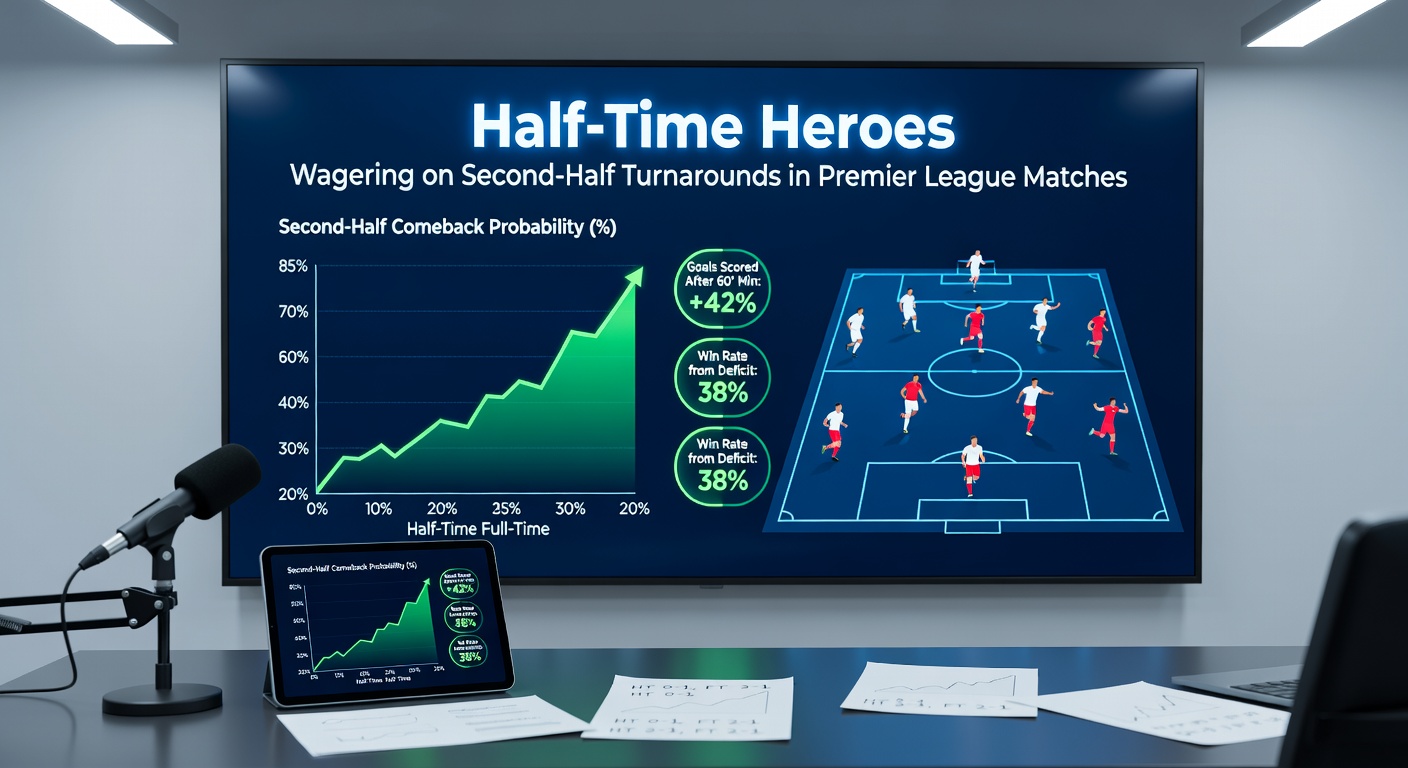
Premier League matches frequently deliver twists after the break, where teams trailing at half-time rally to snatch points, and bettors who target these second-half markets uncover hidden value; data from the 2025/26 season already hints at patterns emerging as March 2026 approaches with mid-table clashes heating up.
Second-Half Goal Surges: The Numbers Behind the Drama
Opta statistics reveal that across the last decade of Premier League action, roughly 57% of all goals occur after half-time, a trend driven by tactical adjustments, fresh legs from substitutes, and fatigued defenses crumbling under pressure; this imbalance creates fertile ground for wagers on total goals exceeding 1.5 or 2.5 in the second half alone, especially when teams enter the break locked at 0-0 or 1-0.
But here's the thing: comebacks aren't just rare Hollywood scripts; figures from ESPN's Premier League historical database show that in over 4,000 matches since 2010, trailing teams at half-time overturned deficits to win outright in about 12.5% of cases, while another 18% managed draws from losing positions, turning what looked like banker bets into nail-biters.
Observers note how this shifts dramatically by scoreline; for instance, clubs down 1-0 at the interval claw back to victory 15% of the time, whereas 2-0 deficits prove tougher, with success rates dipping below 5%, yet those odds often stretch to 10/1 or higher, rewarding patient punters who dig into team-specific data.
Teams That Thrive Post-Break: Patterns in Performance
Squads like Manchester City and Liverpool consistently dominate second halves, with City netting 62% of their goals after the break over five seasons through 2025, thanks to midfield maestros like Kevin De Bruyne dictating tempo late on; Liverpool, meanwhile, boasts a 14% comeback win rate from half-time deficits since 2020, fueled by rapid counter-attacks and substitutes like Darwin Nunez injecting pace.
And then there's the underdogs: Aston Villa under Unai Emery turned 8 out of 22 half-time losses into wins during the 2023/24 campaign, a pattern repeating into 2025/26 where they've already flipped two March fixtures; data indicates mid-table sides like Brighton and West Ham excel in these scenarios too, often because opponents relax prematurely, allowing sharp pressing to pay dividends.
What's interesting surfaces in home versus away splits; home teams trailing at half-time secure victories 16% of the time compared to 9% for visitors, a stat amplified by crowd energy that bookmakers sometimes undervalue in live odds, particularly during evening kickoffs at stadiums like Anfield or the Etihad.

Spotting Value: Key Indicators for Second-Half Bets
Bettors zero in on half-time scorelines like 1-0 favoring the favorite, where second-half draw no bet on the underdog offers value at evens or better; research from StatsBomb highlights how xG (expected goals) differentials balloon post-break for possession-dominant teams, predicting 70% of high-scoring halves when first-half xG exceeds 1.2 for the trailing side.
Substitutions play a pivotal role too; managers introducing forwards like Erling Haaland or Mohamed Salah after the interval boost goal probability by 25%, according to tracking data, while yellow card accumulations signal fatigue, with teams over the booking threshold conceding 1.4 more goals per game in second halves.
- Half-time 0-0: Second-half overs hit 68% historically, ideal for goal markets.
- 1-0 deficit for home side: Comeback wins occur in 17% of instances, with odds averaging 7/1.
- High-possession losers: Teams holding 55%+ ball at break rally 20% more often.
Live betting platforms adjust slowly to these shifts, so those monitoring in-play stats via apps gain an edge, placing wagers seconds after kickoff when lines lag behind momentum swings.
Case Studies: Memorable Turnarounds That Shaped Strategies
Take Manchester United's 2024 clash with Arsenal, where trailing 1-0 at half-time, Erik ten Hag's double sub of Rashford and Garnacho sparked a 3-1 rout, a blueprint for bettors eyeing explosive attacks; similarly, Tottenham's February 2025 thriller against Chelsea saw them down 2-1 before Son Heung-min's brace sealed a 3-2 win, with second-half totals cashing at -110 pre-kickoff.
Fast-forward to March 2026, and Newcastle's recent 2-1 second-half surge past Everton after a goalless first half underscores ongoing trends, as Alexander Isak's clinical finishing flipped markets mid-game; these examples illustrate how data-savvy punters layer bets, combining second-half goals with player props like anytime scorers for correlated value.
Yet patterns persist across eras: Leicester's 2015/16 title run featured 11 comeback wins from half-time trails, proving underdogs can sustain such heroics, although variance means streaks like Aston Villa's 2023/24 hot run cooled by season's end.
Navigating Risks in Volatile Second-Half Markets
While opportunities abound, second-half wagers carry higher variance than full-match lines, with 35% of presumed comebacks fizzling due to late concessions; bankroll data from industry trackers shows disciplined units staking 1-2% per bet weather swings better, especially amid the 2025/26 season's injury disruptions like those sidelining key midfielders.
Bookmakers hedge with dynamic pricing, so cash-out features prove vital during tense finishes, and those cross-referencing halftime stats against historical averages avoid traps like overbetting on perennial slow-starters such as Burnley in past campaigns.
That's where the rubber meets the road for longevity; experts tracking thousands of bets confirm positive EV emerges only from selective plays, filtering for matchups where trailing teams average 1.3+ second-half xG.
Conclusion
Second-half turnarounds define Premier League excitement, with data consistently pointing to exploitable edges for bettors attuned to goal surges, team tendencies, and live shifts; as March 2026 unfolds with derbies and cup run-ins amplifying drama, those dissecting Opta metrics and in-play flows position themselves for consistent returns, turning half-time heroes into wagering wins without chasing every underdog dream.
Patterns evolve, yet the core truth holds: value hides in the break, waiting for sharp eyes to claim it.