Investigating Crowd Density Impacts on Home Advantage Metrics in European Basketball Leagues
Xander Keller · Jun 4, 2026
Investigating Crowd Density Impacts on Home Advantage Metrics in European Basketball Leagues
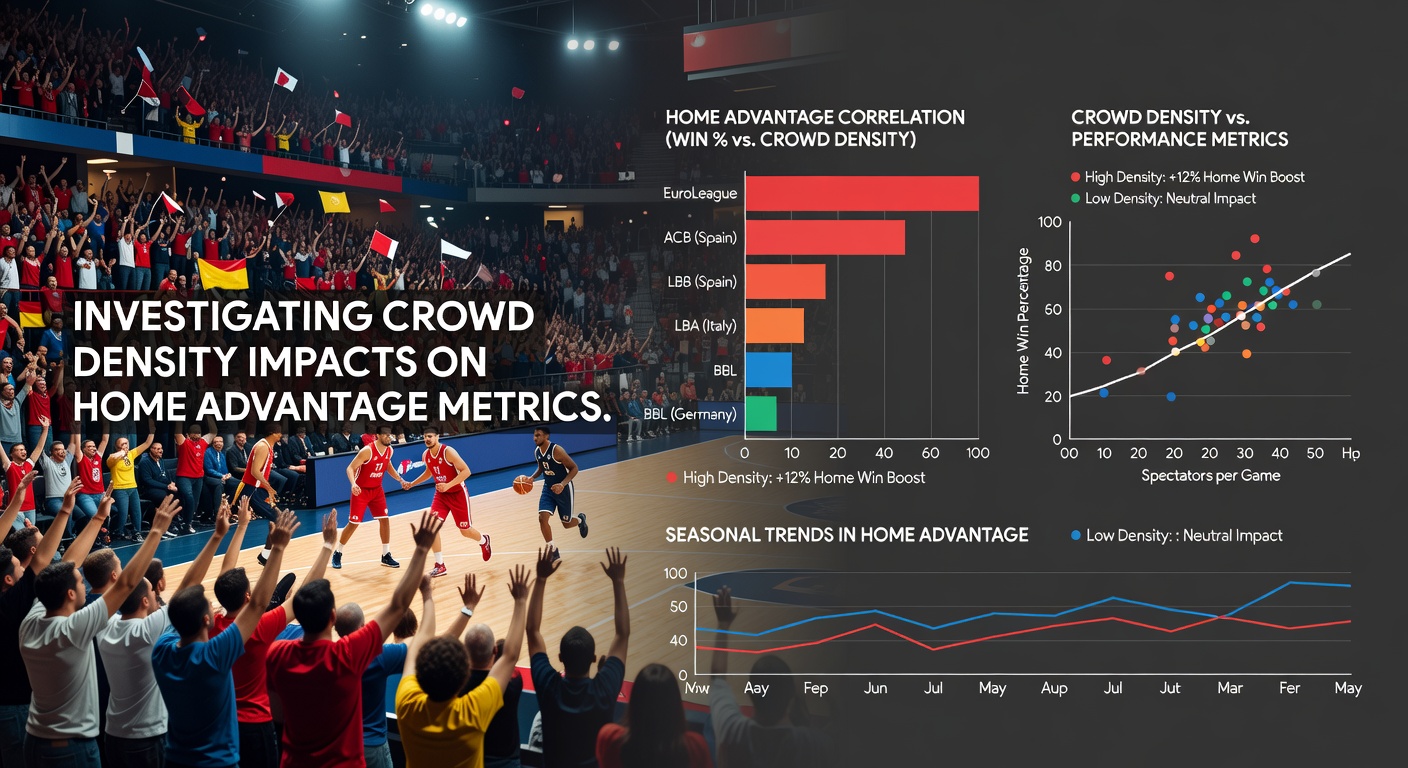
Researchers tracking European basketball have compiled extensive datasets on home advantage across multiple seasons, focusing on how spectator numbers alter performance indicators like win percentages, scoring margins, and foul differentials. Studies conducted in leagues such as Spain's Liga ACB, Germany's Basketball Bundesliga, and Italy's Lega Basket Serie A reveal consistent patterns where denser crowds correlate with elevated home team success rates, often by margins of 3 to 7 percentage points compared to lower-attendance games. These findings draw from match logs spanning 2018 through early 2026, including periods of restricted attendance that provided natural experimental controls. Home advantage metrics encompass more than simple victory rates, incorporating variables such as points scored in the paint, defensive efficiency ratings, and referee decision distributions. Data indicates that when arena occupancy exceeds 85 percent of capacity, visiting teams experience measurable declines in three-point shooting accuracy and increased turnovers under sustained auditory pressure. Analysts at institutions monitoring continental competitions note that these effects intensify during playoff series, where cumulative crowd exposure compounds over consecutive nights.Measuring Crowd Density Across Key Leagues
European basketball venues range from intimate 5,000-seat halls in smaller Bundesliga markets to expansive 15,000-plus arenas hosting EuroLeague clubs, creating wide variance in density levels per square meter. Tracking systems deployed by league statisticians record attendance alongside acoustic measurements, allowing correlations between spectator concentration and on-court outcomes. In the 2024-2025 campaign, for instance, teams playing before near-capacity crowds posted home win rates averaging 62 percent, whereas matches with under 50 percent occupancy showed rates closer to 54 percent, according to aggregated league reports.
Travel fatigue and venue familiarity remain constant factors, yet crowd-related variables demonstrate independent influence when isolated through regression models. Observers note that referees issue fewer home-team fouls in high-density environments, a trend documented across multiple countries and supported by video review archives. This pattern holds steady even after accounting for player personnel changes and coaching adjustments between seasons.Post-Pandemic Comparisons and Recent Trends
The return of full-capacity attendance following pandemic restrictions offered researchers a clear before-and-after framework. Empty-arena games from 2020-2021 produced home advantages that dropped by roughly half in several leagues, only to rebound as spectators returned in 2022 and beyond. June 2026 updates from ongoing monitoring projects continue to track these rebounds, particularly in nations where ticket demand has surged alongside economic recovery. Figures reveal that density thresholds around 70 percent occupancy mark the point where measurable shifts in home-team defensive intensity begin to appear.
Player and Official Responses to Audience Pressure
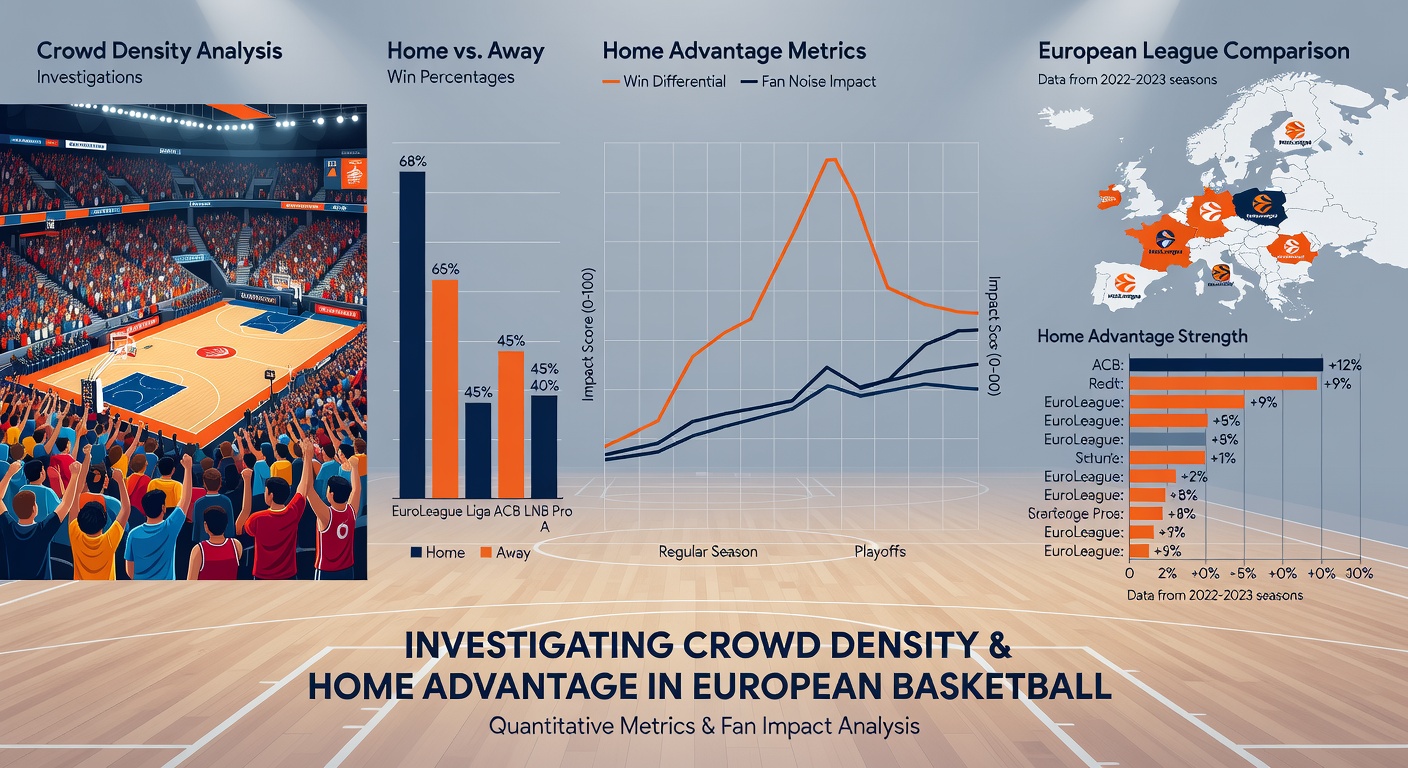
Physiological data collected via wearable sensors shows elevated cortisol levels among visiting players during densely attended contests, correlating with reduced free-throw conversion in late-game situations. Coaches adapt by emphasizing communication drills to counteract crowd noise, while officials undergo training modules designed to maintain consistency regardless of acoustic environment. League-wide reviews indicate that these adaptations partially mitigate but do not eliminate density-related effects on game flow.
Regional differences emerge when comparing northern and southern European circuits, with Mediterranean arenas often generating higher decibel averages due to architectural acoustics and supporter culture. Statistical models published through academic channels, including work referenced by the FIBA research portal, confirm that such variations influence foul-call distributions more noticeably in certain geographic clusters.Broader Contextual Factors and Data Integration
While crowd density stands as a primary variable, analysts integrate additional inputs such as arena altitude, court surface conditions, and broadcast lighting to refine predictive accuracy. Longitudinal datasets maintained by national federations allow for season-over-season comparisons that isolate spectator influence from roster turnover. Evidence suggests that clubs investing in fan-engagement initiatives experience amplified home metrics, particularly when density combines with coordinated chanting sections positioned near visitor benches.
Recent advancements in spatial analytics now map spectator distribution within arenas rather than relying solely on total attendance figures. These granular approaches reveal that concentrated blocks of supporters near the court exert stronger effects on perimeter shooting than evenly distributed crowds of equal size. European competitions have begun incorporating such metrics into official performance dashboards shared with participating teams.Conclusion
Comprehensive examination of crowd density impacts continues to yield actionable insights for European basketball stakeholders. Aggregated evidence from multiple leagues demonstrates that higher spectator concentrations reliably enhance select home advantage indicators while introducing measurable challenges for visiting sides. Ongoing data collection through 2026 and future seasons will further clarify thresholds and interactions, supporting refined strategic planning across domestic and continental levels.