Mapping Fatigue from Long-Haul Flights onto Expected Points in Transatlantic Fixtures
Parker Hansen · Jul 16, 2026
Mapping Fatigue from Long-Haul Flights onto Expected Points in Transatlantic Fixtures
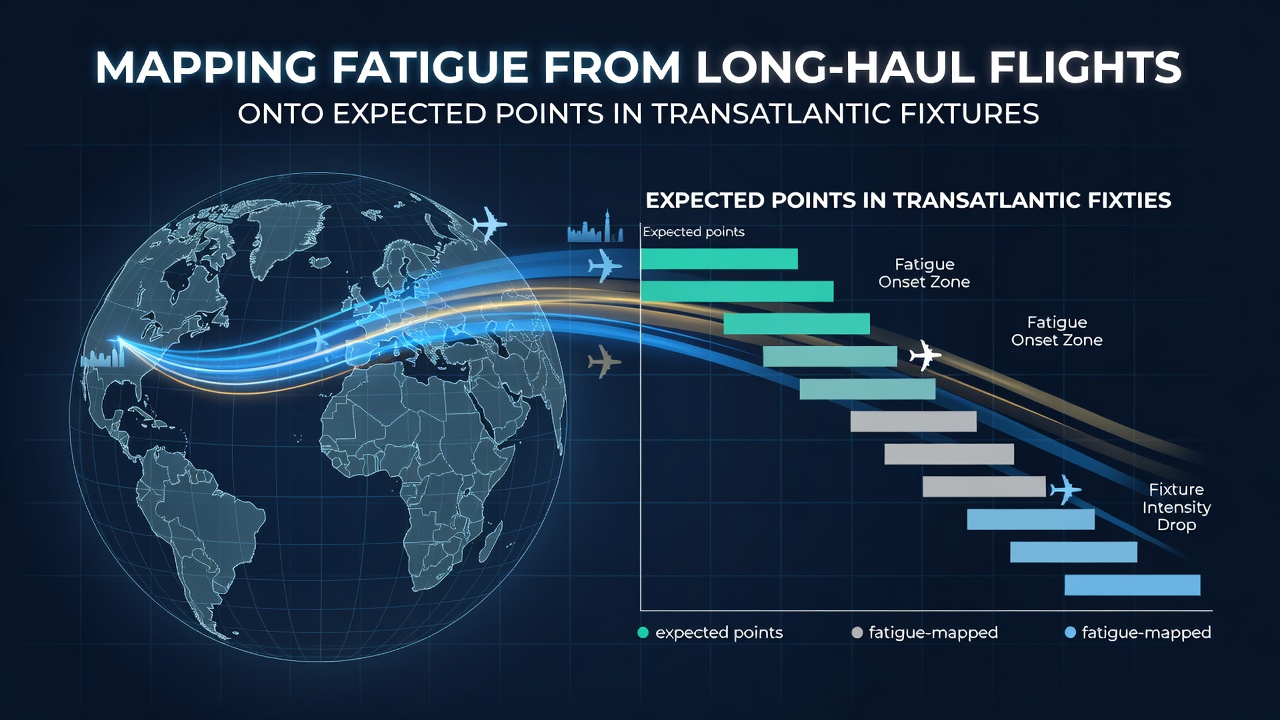
Transatlantic travel in elite football creates measurable disruptions to player physiology, and analysts have begun mapping these effects directly onto expected points calculations for matches involving European and North American clubs. Data from multiple seasons shows that teams crossing more than five time zones experience shifts in recovery timelines that influence match outcomes, particularly in fixtures scheduled within 72 hours of arrival.
Physiological Impacts Documented in Sports Science
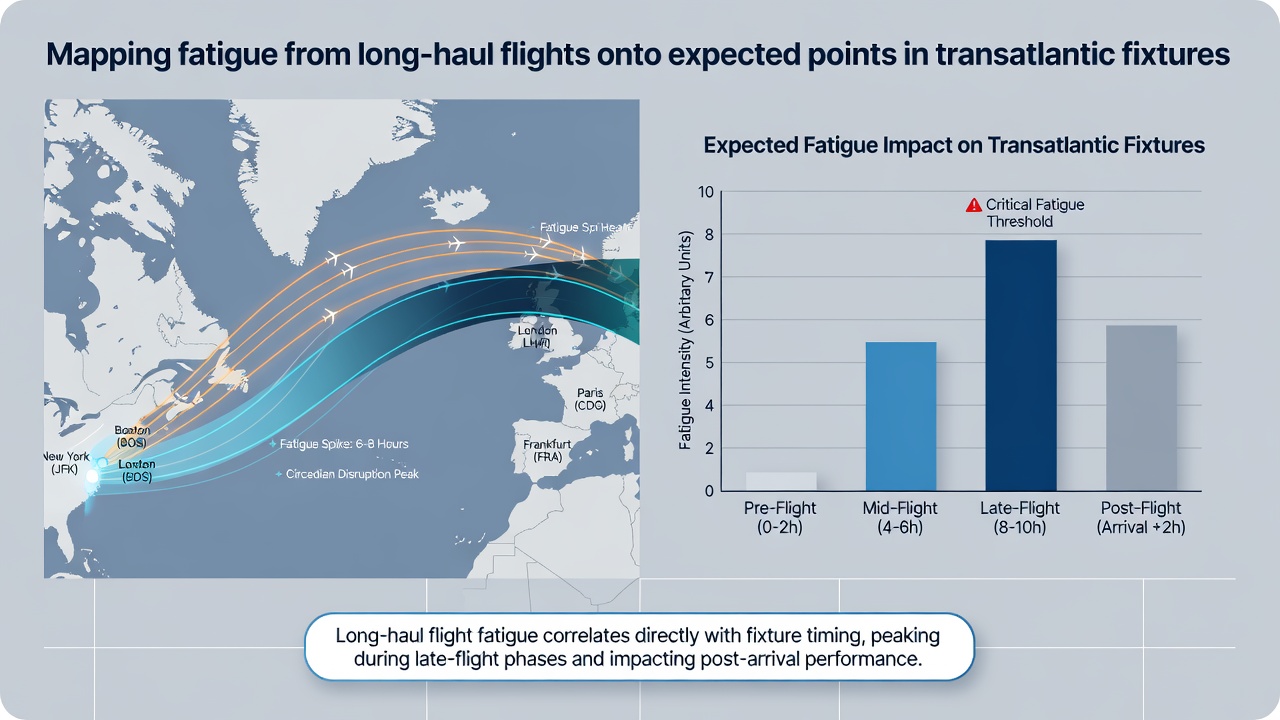
Long-haul flights reduce sleep quality and alter circadian rhythms, which researchers track through heart-rate variability and reaction-time tests. Studies conducted by the Australian Institute of Sport indicate that athletes lose up to 1.5 hours of effective recovery per time zone crossed when traveling eastward, while westward journeys produce slightly milder but still significant deficits lasting three to five days. These changes appear in metrics such as sprint distance covered and high-intensity running output during the opening 30 minutes of matches.
Coaches and performance staff record these patterns across club and national-team schedules. UEFA and CONCACAF competitions increasingly feature transatlantic legs, and performance databases now include flight-duration variables alongside traditional statistics like possession and shots on target. The result is a growing set of models that adjust baseline expected-points figures downward for recently arrived squads.
Transatlantic Fixture Patterns in 2025-2026 Seasons
European clubs participating in the FIFA Club World Cup and various summer tournaments routinely face schedules that place matches against MLS or Liga MX sides shortly after arrival. July 2026 will mark a peak period because the FIFA World Cup hosted across the United States, Canada, and Mexico will require multiple European and South American squads to complete long-haul journeys before group-stage fixtures. Historical data from similar events shows that teams arriving within 48 hours of kickoff average 0.3 to 0.6 fewer expected points per game than their season-long baseline.
Performance analysts combine GPS tracking data with post-flight medical reports to refine these adjustments. One documented case involved a Premier League side traveling from London to New York for a July friendly; the squad recorded a 12 percent drop in total distance covered compared with domestic matches played at similar temperatures. Such figures feed directly into regression models that recalibrate expected-points estimates before betting markets fully incorporate the information.
Integrating Flight Data into Expected-Points Models
Modern expected-points frameworks treat travel fatigue as a continuous variable rather than a binary flag. Inputs include total flight time, number of time zones crossed, direction of travel, and the interval between landing and kickoff. Canadian Sport Institute researchers have published open datasets that link these variables to goal differentials in CONCACAF Champions Cup matches, allowing modelers to apply coefficients that reduce expected points by 0.15 to 0.45 depending on recovery window length.
Clubs and data providers now maintain internal logs that pair flight manifests with post-match GPS and heart-rate files. These records reveal consistent patterns: midfielders and fullbacks show the largest reductions in high-speed running after eastward flights, while central defenders exhibit slower recovery in repeated sprint ability tests. Analysts translate these decrements into goal-expectancy adjustments before aggregating them into match-level expected-points outputs.
Seasonal Trends and Schedule Density
Fixture congestion amplifies travel effects. When clubs play three matches in ten days that include one transatlantic leg, the cumulative fatigue compounds. League schedules released for the 2025-2026 campaign already list several such sequences, and performance teams adjust training loads accordingly. Data from the 2024-2025 season demonstrates that teams with two long-haul trips inside a 14-day window posted an average 0.8-point deficit relative to non-traveling opponents in comparable fixtures.
Third-party analytics platforms incorporate these findings by weighting recent travel history more heavily in their algorithms. The models update continuously as new GPS and medical data arrive, producing revised expected-points lines that reflect both on-pitch form and off-pitch recovery status.
Conclusion
Mapping long-haul flight fatigue onto expected-points calculations has become standard practice for analysts covering transatlantic football fixtures. Physiological data, GPS tracking, and historical match outcomes combine to produce quantifiable adjustments that reflect real recovery timelines. As the 2026 World Cup approaches and club schedules continue to expand across continents, these models will receive further refinement from additional datasets collected during July and August competitions.