Mapping Referee Assignment Patterns to Card and Goal Line Markets in European Cup Ties
Xander Keller · Jun 6, 2026
Mapping Referee Assignment Patterns to Card and Goal Line Markets in European Cup Ties
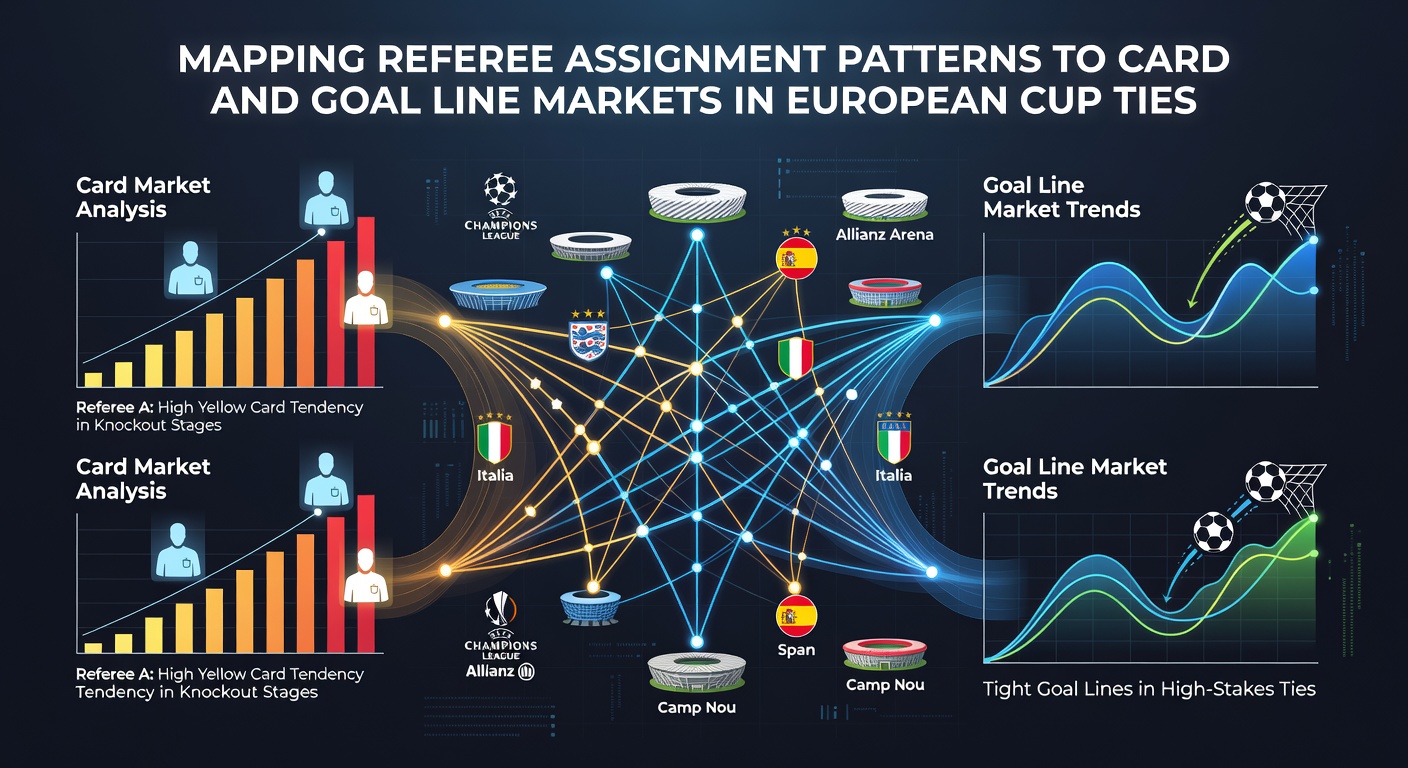
European cup ties bring together clubs from across the continent and the referee assignments often shape the flow of matches in ways that ripple into betting markets. Observers track these appointments because certain officials consistently handle higher card volumes while others oversee games that trend toward fewer goals or tighter defensive structures. Data from recent seasons shows patterns emerging when UEFA selects referees from specific regions for knockout stages, and analysts map those choices against historical card counts and goal line results to identify market movements.
Referee Pools and Assignment Trends in UEFA Competitions
UEFA maintains a structured referee pool that rotates officials through Champions League and Europa League fixtures, with assignments announced days before each tie. Researchers who examined five seasons of appointments found that referees from leagues with stricter disciplinary records receive more assignments in high-stakes knockout rounds, while those from leagues known for fluid attacking play appear more frequently in group stages. These selections create measurable differences because the officials bring distinct interpretations of the laws of the game into each match.
Take one set of fixtures where a referee known for issuing multiple yellow cards per game was assigned to a round-of-16 tie between an Italian and a German side. Historical records indicate that similar assignments produced an average of 5.2 cards per match across comparable fixtures, which exceeded the competition-wide average by nearly one card. The pattern held across both legs because the official applied consistent standards from the opening whistle.
Card Market Correlations and Historical Benchmarks
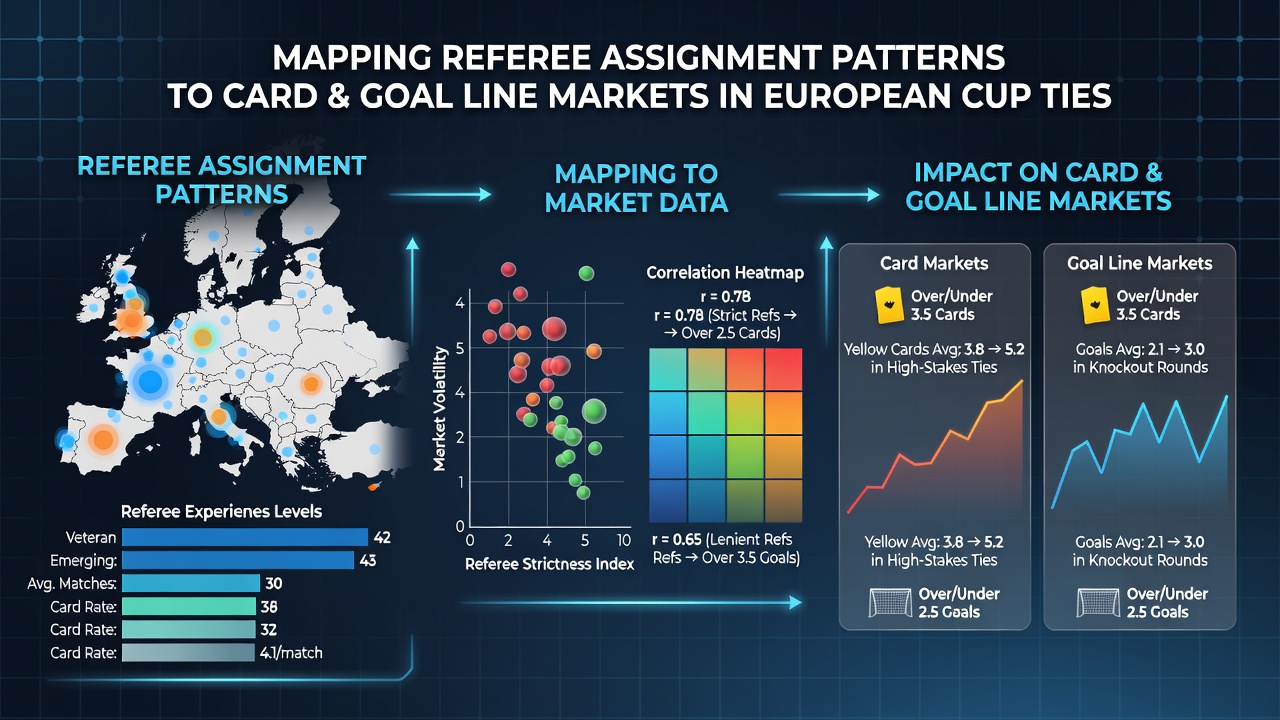
Card markets respond directly to these assignment announcements because bookmakers adjust lines based on the referee's past output. Figures reveal that referees averaging over 4.8 cards per game push over-card lines higher in pre-match markets, while those below 3.8 cards per game often see under lines tighten. The effect becomes more pronounced in two-legged ties where the second leg carries added tension and time-wasting tactics increase the likelihood of late cautions.
Studies conducted by sports analytics groups across multiple European countries confirm that referee nationality also influences outcomes. Officials from southern European federations tend to issue fewer cards in matches involving teams from the same region, whereas northern European referees maintain steadier card rates regardless of team origin. This distinction matters when mapping assignments because a single swap in the referee roster can shift card totals by 15 to 20 percent in historical samples.
Goal Line Markets and Referee Styles
Goal line markets show different but related patterns. Referees who allow more physical play without frequent stoppages create longer passages of open play, which correlates with higher goal counts in certain tie formats. Conversely, officials who interrupt the game often produce lower-scoring affairs because teams lose rhythm and set-piece opportunities dominate. According to data compiled by the UEFA technical department, matches overseen by referees with high stoppage rates averaged 2.3 goals per game, while those with lower interruption counts reached 2.9 goals on average.
June 2026 will feature the final stages of the 2025/26 Champions League cycle, and preliminary assignment lists already indicate which officials are positioned for quarter-final and semi-final duties. Those who studied the previous cycle note that referees selected for June fixtures tend to come from pools that favor controlled physicality, which has historically kept goal lines around the 2.5 mark in elimination games. The same officials often carry elevated card averages into those matches, creating overlapping market effects.
Practical Mapping Techniques Used by Analysts
Analysts build databases that cross-reference referee identities with venue, competition stage, and competing styles. They record metrics such as average cards per 90 minutes, fouls awarded in the penalty area, and added time distributions. When a new assignment appears, the historical profile feeds into updated market expectations. One documented case involved a referee reassigned from a group-stage fixture to a knockout tie; the card line moved upward by half a card within hours of teh announcement, and the match finished with six yellows and one red, aligning with the prior benchmark.
Goal line adjustments follow similar logic. Referees who favor quick restarts reduce stoppage time and allow teams to maintain attacking momentum, which lifts over-goal probabilities. Those who manage games with frequent checks and delays compress the effective playing time, lowering goal expectations. Research published in the International Review for the Sociology of Sport highlights how these stylistic differences persist across borders and competition formats.
Conclusion
Mapping referee assignments to card and goal line markets in European cup ties relies on consistent data collection and pattern recognition. UEFA continues to publish appointment lists and post-match reports that supply the raw material for such analysis. Observers who track these records over multiple seasons identify repeatable relationships between specific officials and market outcomes, allowing the information to inform pre-match positioning in both card and goal line segments. The approach remains grounded in observable historical performance rather than speculation about future behavior.