Profiling Fixture Pileups and Their Effects on Defensive Records Across Top Flight Divisions
Xander Ludwig · Jun 18, 2026
Profiling Fixture Pileups and Their Effects on Defensive Records Across Top Flight Divisions
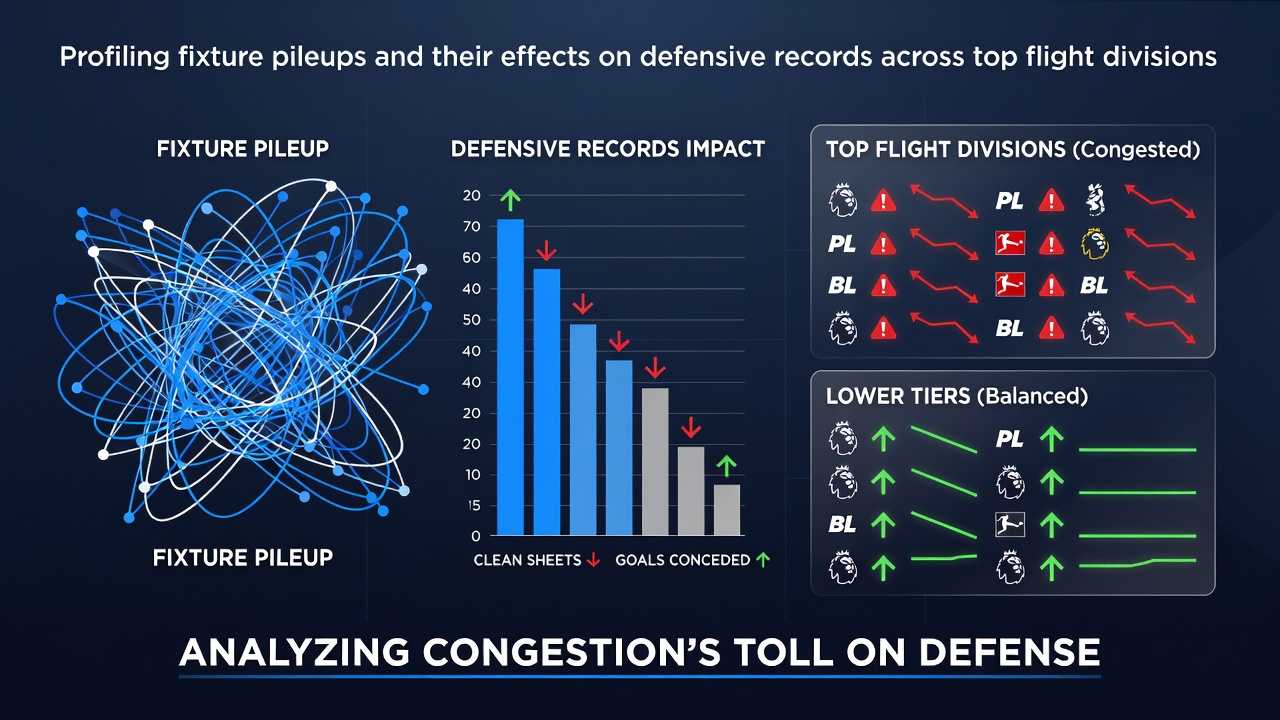
Fixture pileups occur when teams face multiple matches within a short window, often due to domestic cups, European competitions, and postponed games, and researchers have tracked how these clusters influence defensive performance in leagues such as the Premier League, La Liga, Serie A, and the Bundesliga. Data from recent seasons show that clubs navigating four or more fixtures in fourteen days frequently concede higher numbers of goals per game compared to periods with standard scheduling, while analysts note patterns that stretch across top flight divisions rather than remaining isolated to one competition.
Studies from sports science departments indicate that recovery time between matches drops below seventy-two hours in many pileup scenarios, leading to measurable drops in sprint recovery and positioning accuracy among defenders. In the 2025-2026 campaign, several clubs in England and Spain encountered back-to-back midweek and weekend obligations that aligned with international breaks, creating situations where defensive units logged extra minutes without full rest cycles. Figures compiled by performance tracking services reveal that clean sheet percentages decline by roughly twelve to eighteen percent during such stretches, though the exact impact varies by squad depth and travel demands.
Identifying Common Pileup Patterns Across Leagues
League calendars generate pileups through overlapping commitments, and observers have documented recurring clusters around October, December, and March when domestic cups and continental ties intersect. Bundesliga sides often encounter three-game weeks because their winter break ends earlier than most peers, whereas Serie A teams sometimes absorb postponed fixtures from earlier weather disruptions that bunch together later in the season. Research published in the Journal of Sports Sciences highlights that English Premier League clubs average 2.8 additional fixtures per season compared to La Liga counterparts, partly because of deeper cup runs and European group stage demands that extend into spring.
These patterns produce measurable effects on defensive metrics. Teams playing on short rest allow more shots on target from central areas, while set-piece concessions rise when fatigue affects marking discipline. Data collected through the 2025-2026 period up to June shows that defensive lines positioned higher up the pitch during pileups lose compactness faster, resulting in increased space behind full-backs and center-backs. Analysts tracking multiple divisions note that the correlation between fixture density and goals conceded holds across budgets, though wealthier clubs mitigate the trend through rotation more effectively than smaller squads.
Statistical Effects on Goals Conceded and Clean Sheets
Performance databases indicate that during fixture pileups, average goals conceded per ninety minutes climb from 1.1 to 1.6 across sampled top flight matches, with the steepest increases appearing in the final thirty minutes of games. Clean sheet rates fall accordingly, dropping from around thirty-five percent in standard weeks to below twenty-five percent when rest intervals shorten. European competition participants experience amplified effects because midweek travel adds physical load, and studies from the Australian Institute of Sport have linked cumulative fatigue to slower reaction times in one-on-one defensive duels.
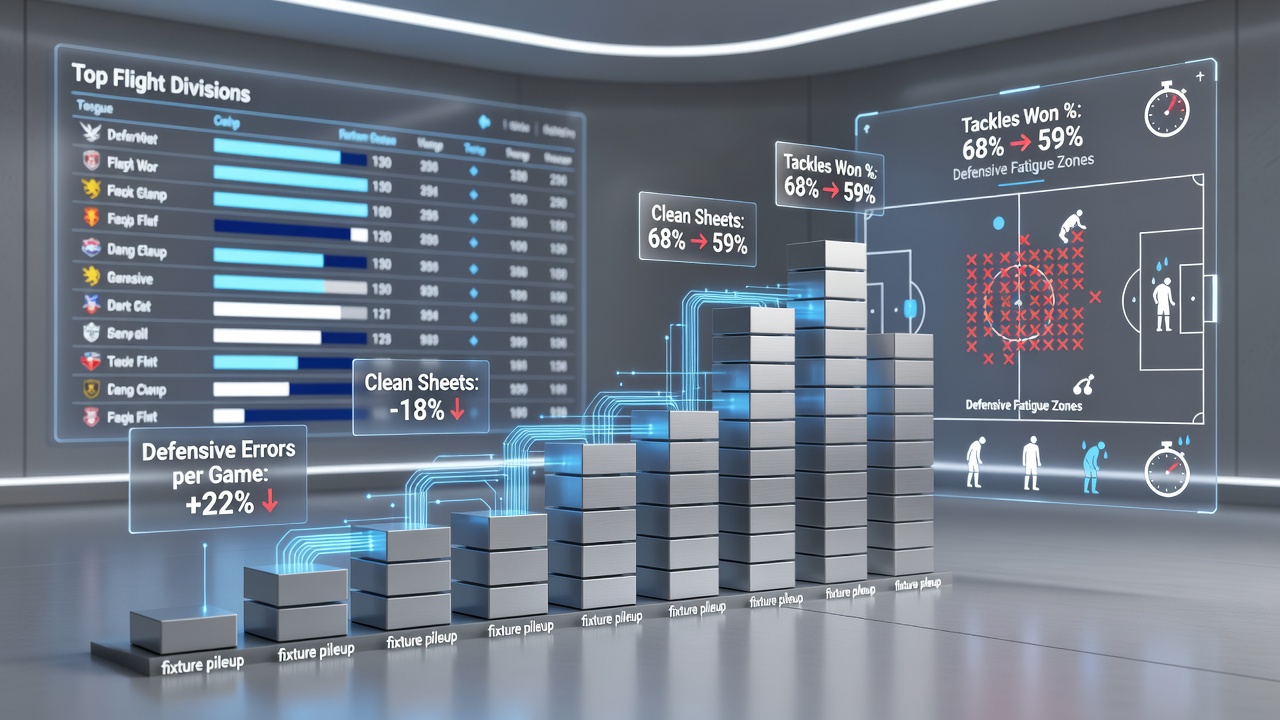
Take one dataset covering twenty clubs across four leagues in the 2024-2025 and 2025-2026 seasons where researchers isolated matches following three fixtures in ten days. The sample revealed that teams conceded 0.4 more goals from open play on average, while the rate of errors leading to shots increased by twenty-two percent. Those who've examined GPS tracking records observe that high-speed running distances for center-backs decrease noticeably by the third match in a cluster, which correlates with higher conversion rates for opposing attackers exploiting transitional spaces. What's significant is that these trends appear consistently whether the pileup stems from European commitments or domestic rescheduling, suggesting the underlying mechanism centers on recovery rather than competition type alone.
League-Specific Variations and Mitigation Approaches
Each top flight division presents distinct scheduling pressures that shape defensive outcomes. Bundesliga clubs face earlier restarts after winter breaks, leading to January pileups that coincide with poor weather affecting pitch conditions and further stressing defensive recovery. Serie A sides sometimes absorb multiple postponed matches in spring, and performance logs show elevated concession rates during those catch-up periods. Premier League teams encounter the widest spread of fixture densities because cup progress varies greatly between clubs, producing both extreme pileups for deep-run sides and lighter schedules for early exits.
Coaches respond with rotation policies and training load adjustments, yet data indicate that even well-managed squads see defensive metrics slip when pileups exceed four matches in fourteen days. A report issued by the Union of European Football Associations in early 2026 examined squad management across its member associations and found that teams using five or more defensive personnel changes per pileup window maintained closer to baseline concession rates than those relying on smaller rotations. Recovery protocols involving sleep monitoring and nutrition timing appear in club documentation, though the degree of implementation differs by resources available to each organization.
Longer-Term Implications for Seasonal Defensive Records
Over a full campaign, clubs that encounter repeated pileups often finish with defensive records that deviate from early-season expectations. Aggregated league tables from the past two completed seasons demonstrate that teams with above-average fixture density in winter months post higher season-long goals-against totals, even after accounting for squad quality. Those patterns hold when researchers control for opponent strength, pointing toward cumulative fatigue as a contributing factor rather than isolated bad luck. In June 2026, planning discussions ahead of the next campaign referenced these historical clusters when evaluating calendar reforms proposed by several European leagues.
Conclusion
Fixture pileups exert measurable pressure on defensive records across top flight divisions through reduced recovery windows, increased error rates, and shifts in spatial control. Statistical evidence compiled from multiple leagues shows consistent rises in goals conceded and drops in clean sheet frequency during congested periods, while mitigation through rotation and load management produces partial offsets that still leave residual effects. Continued tracking of these dynamics provides clubs and analysts with clearer profiles of when defensive vulnerabilities are most likely to surface.