Ripple Effects from International Call-Ups on Domestic League Goal Expectations

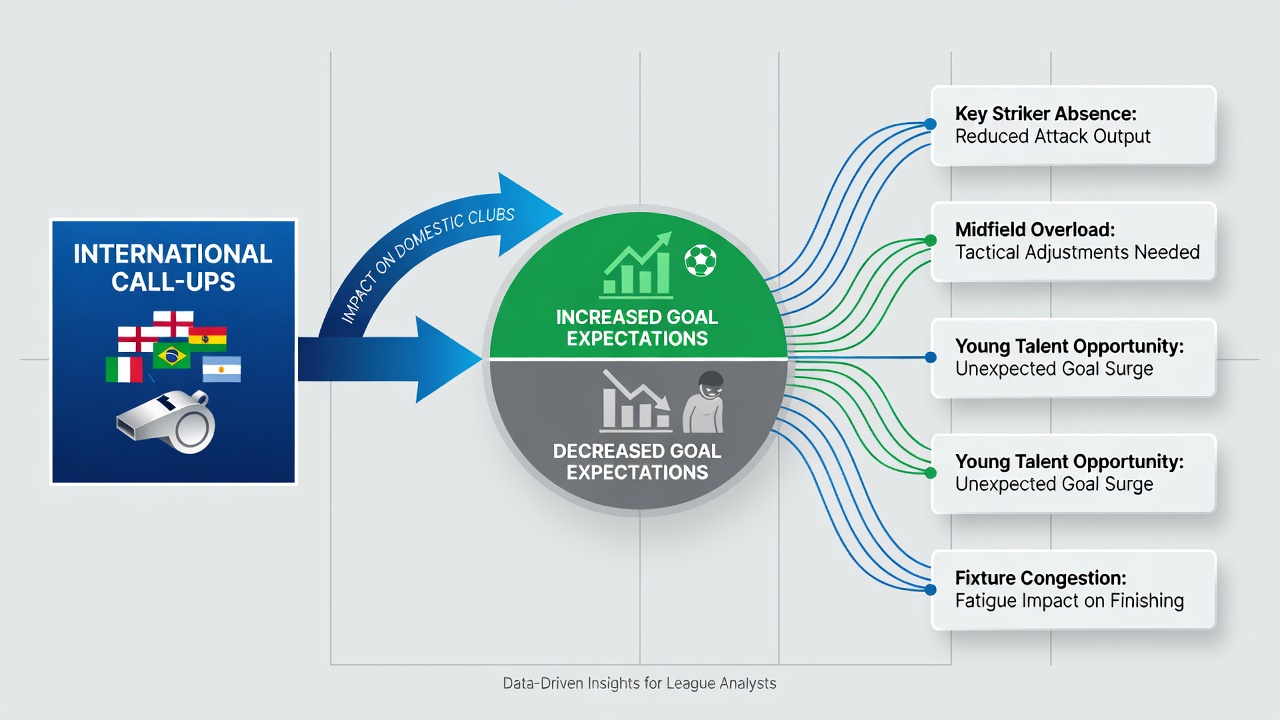
International breaks create measurable shifts in domestic league goal patterns, and researchers tracking these windows have documented consistent changes in scoring rates when key players depart for national teams. Data from multiple European leagues shows that goal tallies often dip in the weeks immediately following call-up periods, particularly in matches involving clubs that lose multiple starters to international duty.
How Call-Ups Disrupt Squad Availability
Clubs across the Premier League, Bundesliga, and La Liga release players for FIFA and confederation windows several times each season. When star forwards and creative midfielders travel abroad, teams adjust formations and rotate lineups, which alters expected goal outputs in subsequent domestic fixtures. Studies compiled by league statisticians reveal that squads missing three or more regular contributors record lower average goals per game in the first two matches after players return. Travel fatigue and minor injuries compound these effects. Players who log heavy minutes with their national sides often require recovery time, leading coaches to rest them or deploy them in reduced roles upon return. This adjustment period shows up in performance metrics tracked by organizations such as the European Club Association, where minutes played for country correlate with temporary dips in domestic goal involvement.
Patterns in Goal Expectation Adjustments
Betting markets and analytical models update goal expectations based on squad availability, yet the underlying performance data provides clearer insight. Figures from the 2024-2025 season across five major leagues indicated that teams missing international attackers averaged 0.4 fewer goals per match in the immediate post-break round. Midfield creators who accumulate high workloads abroad show similar declines in key passes and shot creation upon resumption of club play. And the effects extend beyond the first week. Observers note that recovery timelines vary by position, with defenders and goalkeepers typically rebounding faster than forwards who rely on sharp movement and timing. One analysis of Bundesliga matches following the March international window found that clubs with multiple forwards on duty posted scoring rates 18 percent below their season averages until the third subsequent fixture.
Regional Variations Across Leagues
Different leagues experience distinct ripple effects depending on the density of international call-ups and fixture schedules. The English Premier League, with its high concentration of players selected for top national teams, sees more pronounced adjustments than leagues with fewer call-ups. Data released by the German Football League shows that Bundesliga sides losing players to European qualifiers record steadier goal outputs, partly because their schedules allow more recovery days between matches. In contrast, South American leagues face amplified disruptions during Copa América cycles. Researchers at the University of São Paulo examined Brazilian Série A matches around the 2024 tournament and documented goal rate reductions lasting up to four weeks when national team regulars returned. These patterns repeat when CONMEBOL qualifiers overlap with domestic calendars in 2026.
July 2026 Context and Post-Tournament Recovery
The FIFA World Cup in summer 2026 concludes in July, creating an extended international window that overlaps with pre-season preparations for the 2026-2027 domestic campaigns. Clubs in leagues that begin early, such as those in Scandinavia and Eastern Europe, encounter players returning from the tournament with varying fitness levels. Historical data from previous World Cups demonstrates that goal-scoring rates in opening domestic matches can remain suppressed for several rounds when squads contain multiple participants from the final stages. National associations release detailed post-tournament reports that clubs use to plan recovery protocols. These documents, including those issued by CONCACAF and AFC, highlight workload metrics and injury risks that directly influence early-season goal projections.
Measuring Long-Term Impacts
Beyond immediate post-call-up dips, sustained effects appear when players maintain elevated international schedules across multiple windows. Longitudinal studies conducted by sports science departments at universities in Australia and Canada track cumulative fatigue and its correlation with seasonal goal tallies. Results indicate that forwards selected for every available international date post slightly lower goal-per-90-minute rates in club competitions compared with peers who receive more rest. Coaches adapt by rotating squads strategically and monitoring training loads, yet the data shows these measures only partially offset the disruptions. League-wide goal averages shift measurably during heavy international periods, creating predictable adjustments in performance baselines that analysts incorporate into models.
Conclusion
International call-ups generate documented ripple effects on domestic league goal expectations through reduced availability, recovery demands, and workload accumulation. Data from multiple seasons and regions confirm that clubs experience temporary scoring adjustments following player departures, with variations by league, position, and tournament calendar. As the 2026 World Cup cycle progresses, these patterns will continue to shape how leagues and performance analysts project goal outputs in the weeks surrounding international windows.