Storm Surges: Coastal Weather Fronts Reshaping Spreads in Surfing Competition Markets
Ben Flores · Jul 25, 2026
Storm Surges: Coastal Weather Fronts Reshaping Spreads in Surfing Competition Markets
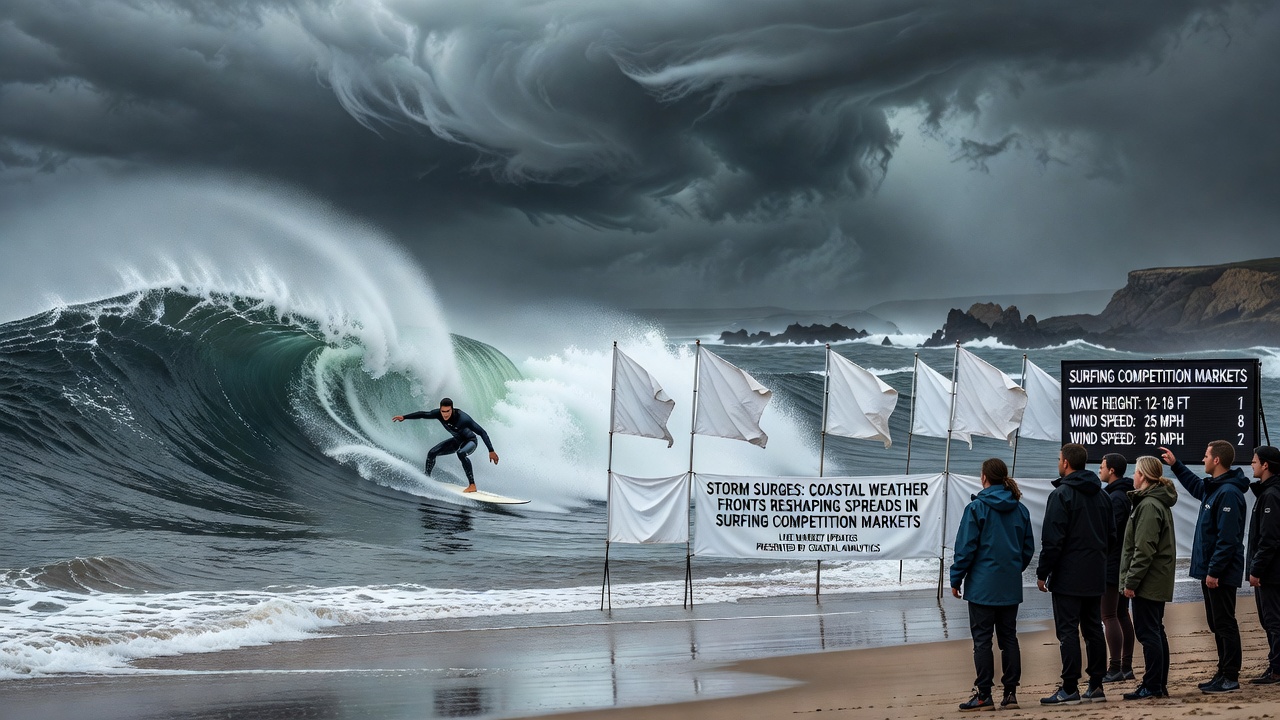
Storm surges driven by coastal weather fronts have altered wave patterns at major surfing venues, and data from meteorological agencies show these shifts directly influence competition timing along with the pricing structures in associated betting markets. Observers note that elevated water levels combined with altered swell directions often force event organizers to adjust heat schedules, which in turn changes the statistical probabilities that shape spreads on individual surfer performances and overall event outcomes.
Weather Patterns and Wave Dynamics
Coastal storm surges occur when strong winds and low-pressure systems push water toward shorelines, and researchers at the National Oceanic and Atmospheric Administration have documented how these events modify nearshore bathymetry over short periods. In surfing competitions the resulting changes in wave height and period affect which athletes advance through elimination rounds, while betting markets respond by recalibrating spreads on metrics such as wave counts per heat and total scores. Data collected during recent Pacific basin events reveal that surge-induced water level increases of 0.5 to 1.5 meters can shift optimal takeoff zones by several meters, forcing competitors to adapt their line selection strategies within minutes of a heat start.
Those who track professional circuits observe that events held in regions prone to seasonal cyclones experience more frequent schedule revisions than those in sheltered locations. July 2026 forecasts for the North Shore of Oahu, for instance, project multiple low-pressure systems that may generate surge conditions coinciding with the scheduled WSL championship window, prompting early discussions among contest directors about potential venue shifts or day-of delays.
Competition Scheduling Adjustments
Event organizers rely on real-time buoy readings and tide models to decide whether conditions meet minimum wave-height thresholds, and when storm surges exceed those thresholds the entire contest structure moves. Historical records from the Australian Bureau of Meteorology indicate that surge events lasting longer than 48 hours have delayed finals at Bells Beach on three separate occasions since 2015, each time altering the distribution of points awarded in the final stages. These delays feed directly into betting markets because live odds adjust for fatigue factors and reduced preparation time between rounds, creating new spreads on metrics such as heat win margins and cumulative event scores.
Market Response Mechanisms
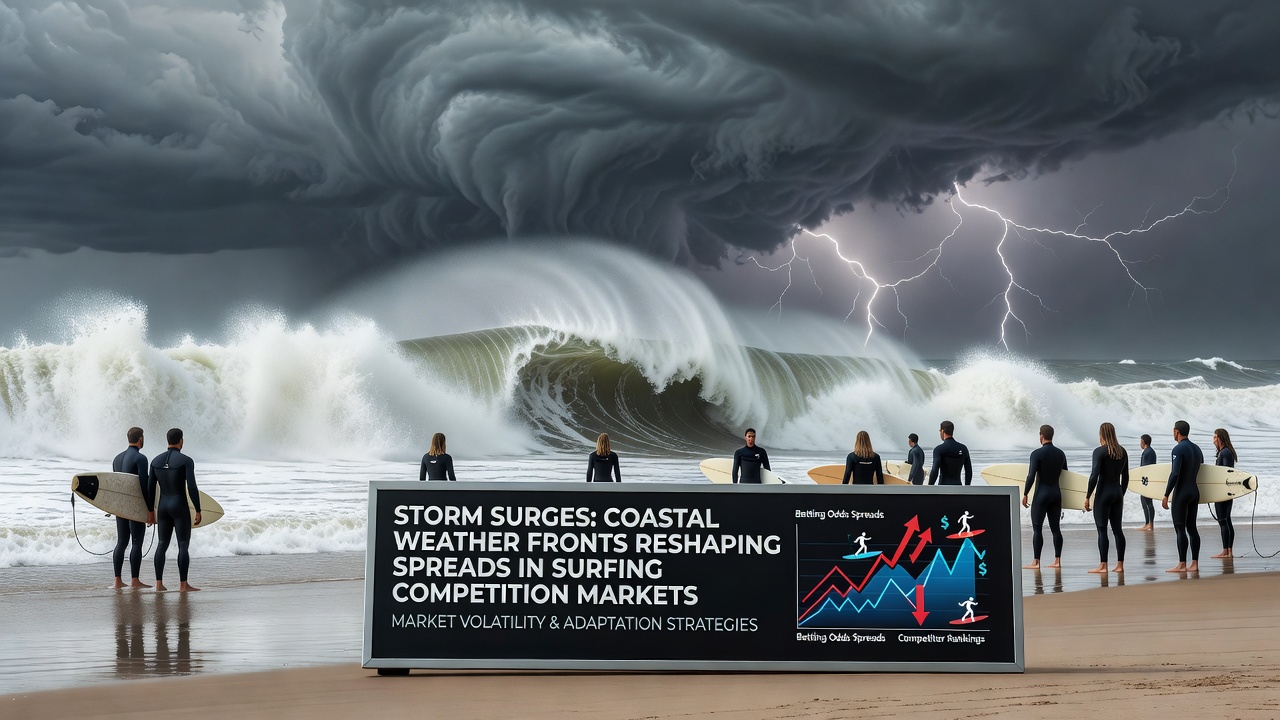
Betting platforms update their spreads within minutes of official schedule announcements, and analysts have recorded average movement ranges of 0.8 to 1.4 points on favored surfer lines following surge-related postponements. The timing of these updates matters because traders who monitor weather feeds gain early visibility into probable heat structures, allowing spreads to reflect revised probabilities before the general market incorporates the same information. One documented case from the 2024 Margaret River Pro showed spreads on a top-seeded athlete widening by 12 percent after a surge warning extended the lay day, illustrating how meteorological data propagates through pricing layers.
Regional Variations and Data Sources
Different coastlines respond uniquely to the same weather front because local bathymetry and prevailing wind patterns interact with surge height in distinct ways. European researchers at the University of Lisbon have modeled how Atlantic storms produce shorter-period surges along the Portuguese coast compared with the longer-period events typical of the Hawaiian Islands, and these differences translate into measurable variations in scoring averages during competitions. Betting markets incorporate such regional models when setting initial spreads, and updates occur as new wave buoy data arrives from stations operated by national meteorological services.
Industry reports from the World Surf League technical committee confirm that forecast accuracy for surge timing has improved with higher-resolution ocean models, yet residual uncertainty still generates volatility in live markets during the final 24 hours before an event window opens. Participants in those markets track multiple data streams simultaneously, including tide predictions, wind speed forecasts, and historical performance data under similar surge conditions, to identify where spreads may have lagged behind the latest meteorological readings.
Longer-Term Implications for Event Planning
Coastal infrastructure investments and competition calendars now incorporate probabilistic surge modeling, and governing bodies have begun publishing seasonal risk assessments that include expected schedule disruption percentages. These assessments feed into preseason market calculations because repeated delays in one region can shift overall championship point distributions and therefore the spreads offered on season-long titles. Data aggregated across multiple cycles show that venues with higher historical surge exposure carry elevated variance in their event outcome distributions, prompting market makers to widen spreads accordingly during those portions of the tour.
Conclusion
Storm surges generated by coastal weather fronts continue to influence both the physical conditions at surfing competitions and the pricing dynamics within associated betting markets. Meteorological records, competition logs, and market data together demonstrate that schedule adjustments triggered by elevated water levels and altered wave patterns produce measurable shifts in spread values across multiple performance metrics. As forecasting precision improves and event organizers integrate more sophisticated risk models, the relationship between surge events and market recalibrations will likely remain a central factor in how spreads are constructed and updated throughout each season.