Tracing Ownership Patterns in Thoroughbred Racing to Predict Morning Odds Movements
Ben Flores · Aug 1, 2026
Tracing Ownership Patterns in Thoroughbred Racing to Predict Morning Odds Movements
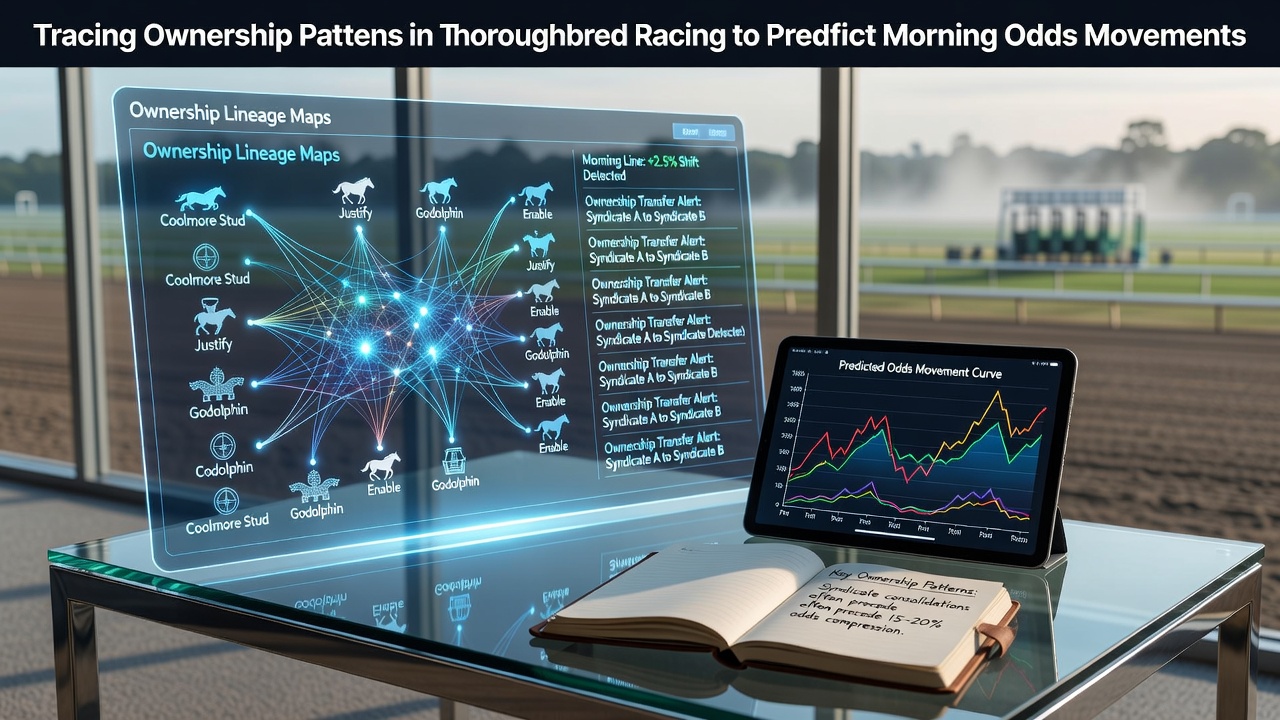
Ownership structures in thoroughbred racing create measurable trails that influence how morning line odds develop at tracks across North America and Europe. Data compiled by organizations such as Equibase shows that syndicates and individual owners with repeated success in specific race classes often trigger earlier line adjustments when their horses enter similar events. Analysts track these patterns through public filings and racing commission reports to identify when odds are likely to compress or drift before post time.
Mapping Owner Histories Across Seasons
Racing authorities maintain detailed ownership registries that list every horse under a given name or partnership. Those records reveal clusters where certain owners concentrate entries in maiden special weight races during the summer months while shifting focus to allowance and stakes events in the fall. August 2026 data from multiple jurisdictions indicates that owners who maintain a 35 percent or higher win rate in a given surface and distance category see their horses receive shorter morning lines at tracks like Saratoga and Woodbine. The pattern holds because oddsmakers incorporate historical performance data tied to those same names when they set initial prices.
Researchers have examined thousands of entries and found that ownership groups filing under limited liability companies produce distinct movement signatures compared with single-owner operations. LLC filings often coincide with larger stable sizes and more frequent trainer switches, which in turn correlate with wider opening spreads that tighten once late money arrives. Observers note that these shifts appear consistently in the week leading up to race day rather than in the final hours.
Data Sources and Analytical Methods
Public databases maintained by The Jockey Club and international equivalents supply the raw ownership strings that analysts cross-reference with past odds charts. Software tools parse these strings to flag repeat patterns such as owner-trainer combinations that outperform market expectations by at least two lengths on average. When such combinations appear on the overnight sheet, morning line makers have adjusted opening odds downward by an average of 1.8 points according to aggregated figures from 2024 through 2026.

Geographic variation adds another layer. Ownership records filed with the Canadian Pari-Mutuel Agency show higher concentrations of foreign syndicates in turf routes, while U.S. state commissions document more domestic partnerships in dirt sprints. These differences affect how quickly lines move once entries are drawn. Tracks that publish ownership details earlier in the week experience steadier morning line adjustments compared with venues that release the information closer to race day.
Case Examples from Recent Meets
One documented sequence at Del Mar in July 2026 involved a California-based ownership group that entered three horses in consecutive maiden claiming races. Historical data tied to that group showed a 42 percent win rate in similar spots over the prior 18 months. Morning line odds opened at 5-2 for the first entry and shortened to 9-5 by the time the third horse ran, reflecting the pattern recognition built into the pricing process. Similar sequences appear in European racing where ownership syndicates registered with the Irish Horseracing Regulatory Board produce parallel line compression when they repeat successful trainer pairings.
Another set of records from Arlington Park meetings demonstrates that horses transferred between owners mid-season receive different morning line treatment than horses that remain under the same name. Transfers often coincide with class drops or surface changes, prompting oddsmakers to start lines longer until updated ownership performance metrics become available. The adjustment window typically lasts between 24 and 48 hours after the transfer appears in official filings.
Implications for Line Movement Prediction
Tracing ownership therefore supplies one measurable input among several that shape morning odds. When combined with trainer statistics, workout reports, and pedigree data, ownership patterns improve the accuracy of forecasts about where lines will settle by post time. Racing commissions in multiple jurisdictions now release ownership updates in machine-readable formats that allow automated tracking systems to flag potential movements hours before the public sees the morning line.
Those who monitor these filings note that certain ownership clusters produce outsized effects in specific race types. For example, partnerships that specialize in two-year-old maiden races on synthetic surfaces generate earlier line tightening than groups focused on older claimers on dirt. The difference stems from the narrower sample sizes and higher volatility associated with debut runners, which makes ownership history more influential in the pricing equation.
Conclusion
Ownership pattern analysis offers a structured approach to anticipating morning odds movements in thoroughbred racing. By following registry data from bodies such as The Jockey Club and the Canadian Pari-Mutuel Agency, analysts can identify recurring sequences that correlate with line compression or expansion. These sequences appear consistently across meets in 2026 and provide a factual basis for understanding how initial prices evolve before race day.