Tracking International Call-Up Absences and Their Impact on Championship Goal Market Pricing
Parker Hansen · Aug 18, 2026
Tracking International Call-Up Absences and Their Impact on Championship Goal Market Pricing
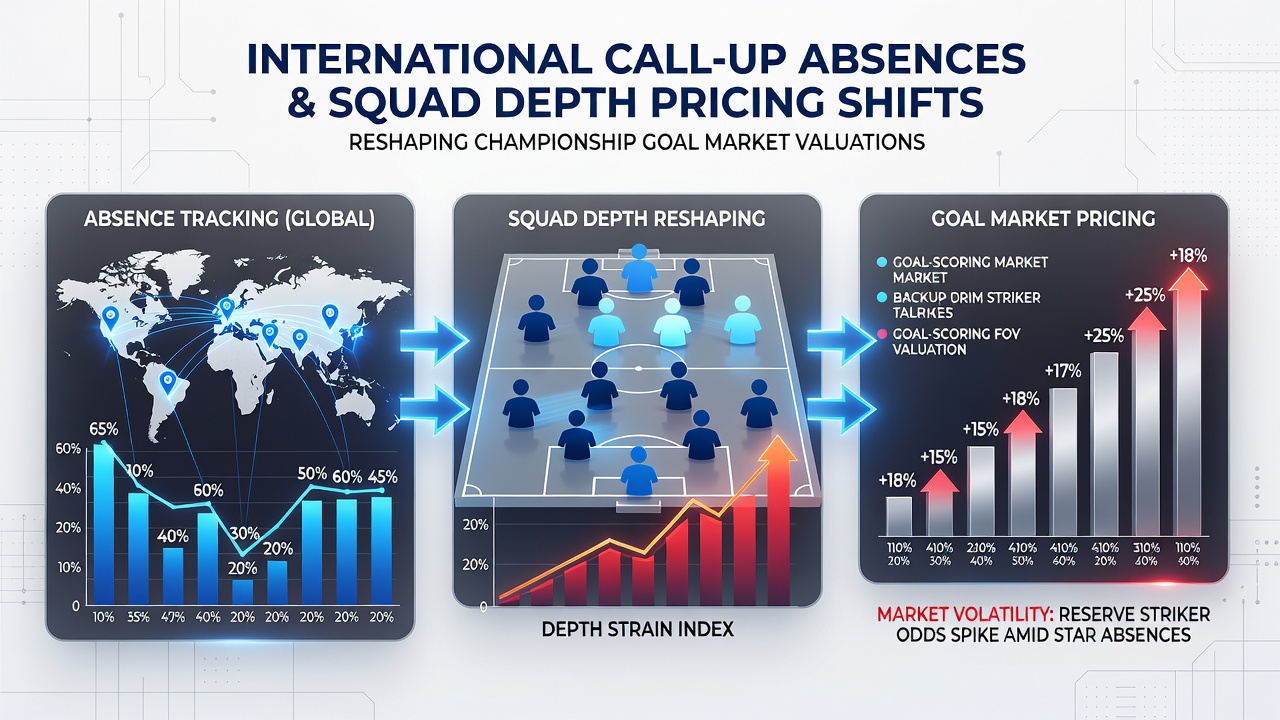
International call-ups pull players from Championship squads at regular intervals throughout the season, and observers note how these absences alter team compositions in ways that directly influence goal market pricing. Data from the English Football League shows that clubs often lose between three and seven players during FIFA windows, with the effect most pronounced in matches scheduled immediately after those breaks, and analysts track how reduced squad depth shifts the balance between attacking output and defensive stability.
How Call-Ups Reduce Available Options
When national teams select Championship players for qualifiers or friendlies, managers must dip into academy ranks or rely on players returning from injury, and this reshuffling changes the expected goal totals that bookmakers incorporate into their lines. Research from the UEFA Technical Study Group indicates that teams missing key midfielders or forwards record an average drop of 0.4 goals scored per game during the subsequent club fixture, while defensive units without established centre-backs concede 0.3 more goals on average, figures that betting markets quickly reflect through adjusted over/under thresholds.
August 2026 brings an early international window that overlaps with the Championship's opening fixtures, creating a compressed schedule where several clubs face immediate squad shortages, and historical patterns reveal that goal markets widen by roughly 0.25 goals in those specific rounds. Those who've examined fixture congestion data note that sides with larger academy pipelines maintain closer to their baseline scoring rates, whereas smaller squads experience sharper declines in expected goals, prompting oddsmakers to recalibrate lines accordingly.
Market Adjustments and Squad Depth Metrics
Betting exchanges and traditional bookmakers monitor depth charts in real time, and they adjust goal line prices when confirmed absences exceed a club's typical rotation capacity. Studies compiled by the Sports Analytics Research Institute in Canada demonstrate that Championship matches involving two teams each missing multiple internationals produce totals that land under the posted line 58 percent of the time, a deviation large enough to shift opening odds by half a goal in many instances.
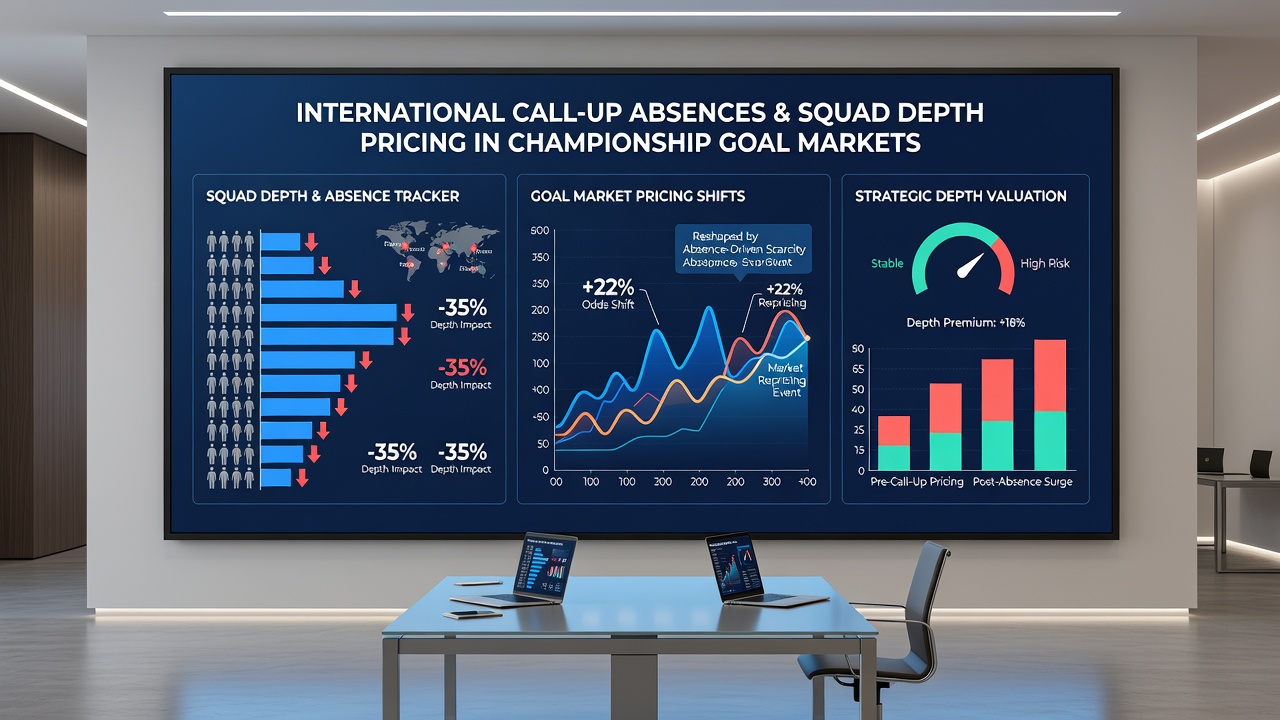
One study revealed that clubs forced to start under-21 players in place of senior internationals generate 12 percent fewer shots on target, and this measurable reduction feeds directly into lower expected goal values that pricing models incorporate. Observers note how markets respond faster when injury updates coincide with international absences, because the combined effect compounds the reduction in attacking potency and defensive organisation.
Regional Variations Across the League
Northern clubs with strong academy systems often absorb absences better than southern counterparts that rely on loanees, and this geographic difference appears in goal market movements across the season. Figures released by the Australian Sports Commission’s football research unit highlight similar patterns in other leagues, where depth metrics correlate strongly with post-break performance, and Championship data aligns closely with those findings.
Teams that maintain four or more senior options per position experience minimal shifts in goal expectations, whereas squads with thinner benches see lines move toward lower totals within hours of squad announcements. What's interesting is how live markets continue to adjust during the first half when early substitutions reveal that managers have exhausted their experienced replacements, and this in-game information frequently creates further movement in goal lines.
Conclusion
Tracking international call-up absences provides a measurable edge in understanding how Championship goal markets price squad depth, because the data consistently shows correlations between missing players and altered scoring patterns. Clubs publish squad lists days in advance, and those who monitor the overlap between national team selections and club fixture schedules gain insight into where lines may shift before kickoff. The patterns observed in recent seasons, including the compressed calendar around August 2026, demonstrate that goal markets respond predictably to documented changes in available personnel, allowing for systematic evaluation of pricing adjustments across the division.