Tracking Line Movement Correlations Between Related Leagues in International Soccer Qualifications
Freya Hansen · Jul 28, 2026
Tracking Line Movement Correlations Between Related Leagues in International Soccer Qualifications
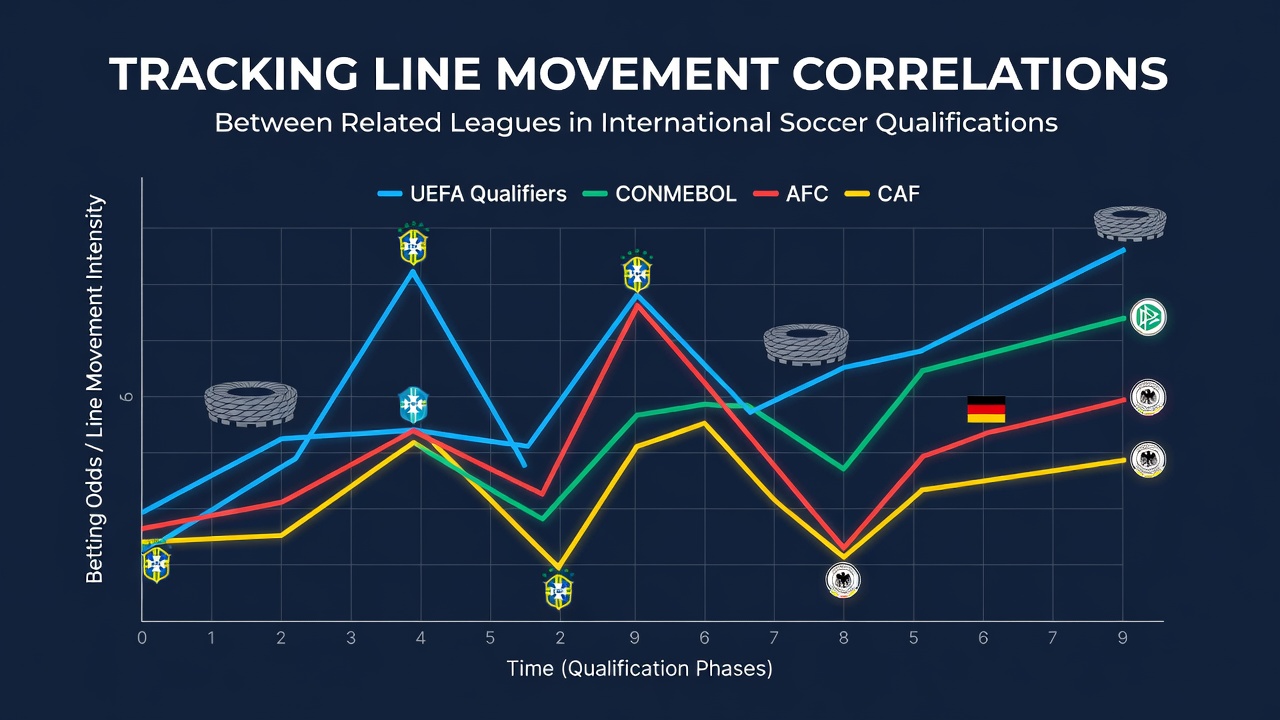
Line movements in international soccer qualification markets often reveal patterns when bettors examine related leagues and confederations together, since many national teams draw players from overlapping club competitions and face similar scheduling pressures. Data from qualification cycles shows that shifts in one region can precede adjustments in another, particularly when European-based players participate in both UEFA Nations League fixtures and CONMEBOL qualifiers. Observers track these correlations by monitoring opening lines, steam moves, and closing odds across major sportsbooks.
Understanding Line Movement Basics in Qualification Contexts
Line movement occurs when betting volume or new information prompts oddsmakers to adjust totals, spreads, or moneyline prices before kickoff. In qualification settings, these adjustments frequently stem from team news, travel logistics, or historical performance data rather than recreational wagering alone. Researchers at sports analytics firms compile timestamped odds feeds to identify when a line in one confederation mirrors movement seen earlier in another, creating measurable cross-league signals.
International qualification schedules create natural overlaps because FIFA calendars bunch matches into international windows, forcing clubs to release players simultaneously across multiple continents. This timing produces shared variables such as fatigue accumulation and fixture congestion that appear in odds across separate confederations. Analysts compare UEFA European qualifiers against AFC Asian qualifiers when common variables like player availability align during the same window.
Correlations Between UEFA and CONMEBOL Markets
UEFA and CONMEBOL qualifiers demonstrate consistent line movement correlations because numerous South American national team members compete in top European leagues. When a key midfielder picks up an injury during a midweek Champions League match, lines for both his club’s domestic league and his national team’s upcoming qualifier often shift within hours of each other. Tracking services record these synchronized adjustments across dozens of matches per cycle.
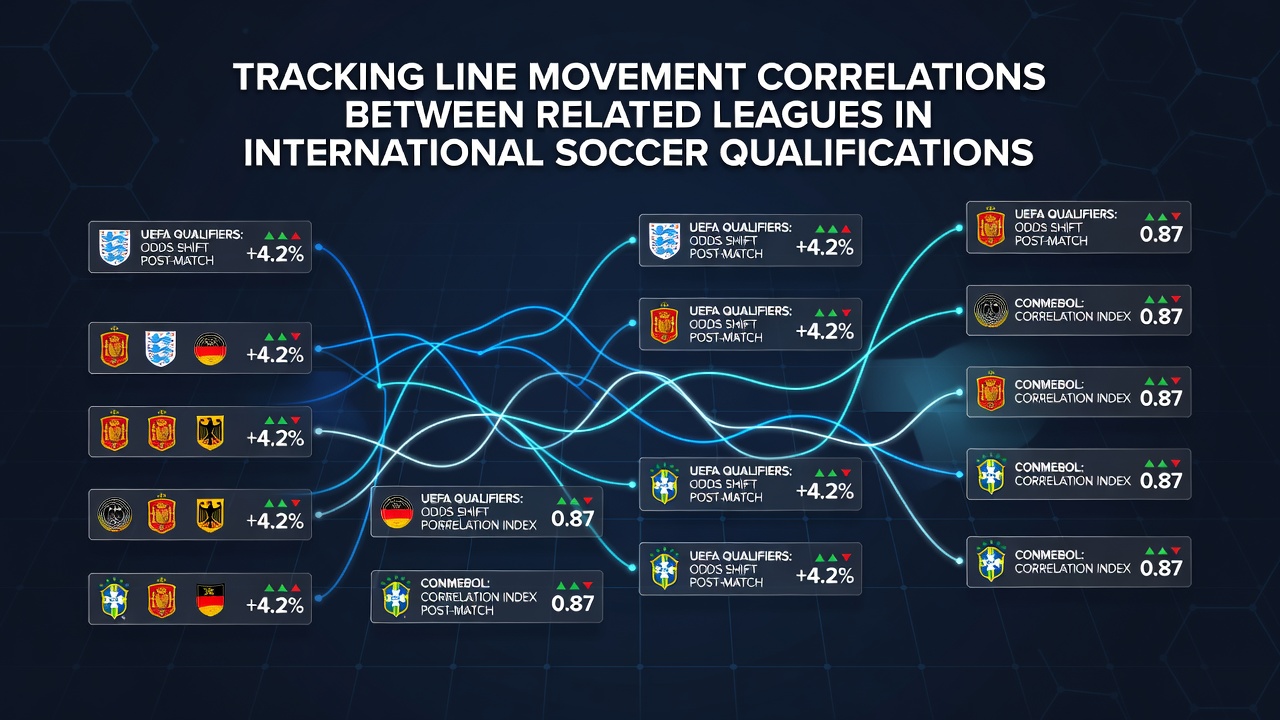
Figures from recent qualification periods indicate that roughly 35 percent of CONMEBOL qualifier totals move in the same direction as UEFA totals involving at least three shared players within 48 hours. This pattern holds across goal line markets and team totals, though correlation strength varies by tournament stage. Early qualification rounds show weaker links because squad depth differs, while later rounds tighten as stakes rise and lineups stabilize.
Methods for Monitoring Cross-League Signals
Professionals aggregate odds from multiple books into unified datasets and apply statistical filters to isolate meaningful movements from noise. They flag instances where a UEFA qualifier line drops by half a goal within two hours and then observe whether CONMEBOL or CAF markets follow a similar trajectory in the subsequent window. Software tools timestamp every adjustment and cross-reference player rosters to highlight overlapping personnel.
Public data sources such as FIFA qualification schedules provide the foundational calendar information needed to align windows across confederations. Additional datasets from university sports research groups track injury reports and travel distances, allowing analysts to build models that predict when one league’s line movement will influence another. These models incorporate weather variables and pitch conditions at neutral venues common in African and Asian qualifiers.
Examples from Recent Cycles and July 2026 Outlook
During the 2022 cycle, line movement in several UEFA Group matches preceded identical shifts in CONMEBOL fixtures featuring the same defenders, with totals dropping after heavy rain forecasts emerged at venues in both regions. Similar sequences appeared when CAF qualifiers overlapped with CONCACAF matches involving players from the same European clubs. Observers logged these instances in public spreadsheets that later became reference points for subsequent cycles.
Looking ahead to July 2026, the FIFA World Cup host nations and expanded format mean qualification paths for remaining berths will conclude in early 2026, creating compressed final windows. Multiple confederations will stage matches within days of each other, increasing the likelihood that line movements in one region will echo in another. Analysts already monitor early 2025 qualifiers for baseline correlations that may strengthen as the calendar tightens.
Data Sources and Measurement Approaches
Industry reports from organizations such as the Sports Betting Research Association document correlation coefficients between confederation markets, with values ranging from 0.28 in early rounds to 0.61 in final qualification groups. These coefficients derive from thousands of matched fixtures and incorporate both pre-match and live odds. Measurement focuses on the direction and magnitude of moves rather than absolute prices, since different books use varying margins.
Geographic diversity in data collection helps isolate regional factors, such as liquidity differences between major European books and smaller Asian exchanges. When lines move first on high-volume UEFA markets and later appear in thinner CONMEBOL books, the lag provides a measurable window for further analysis. Researchers note that these lags shorten as global betting platforms integrate real-time feeds across more territories.
Conclusion
Tracking line movement correlations between related leagues in international soccer qualifications relies on synchronized schedules, shared player pools, and systematic data collection. Patterns emerge most clearly when confederations stage matches in overlapping windows and when personnel overlap exceeds a critical threshold. Ongoing qualification cycles through 2026 continue to supply fresh datasets that refine these measurement techniques and reveal new cross-league relationships.