Tracking Syndicate Influence Across International Rugby Union Markets Through Line Movement Data
Freya Hansen · Sep 19, 2026
Tracking Syndicate Influence Across International Rugby Union Markets Through Line Movement Data
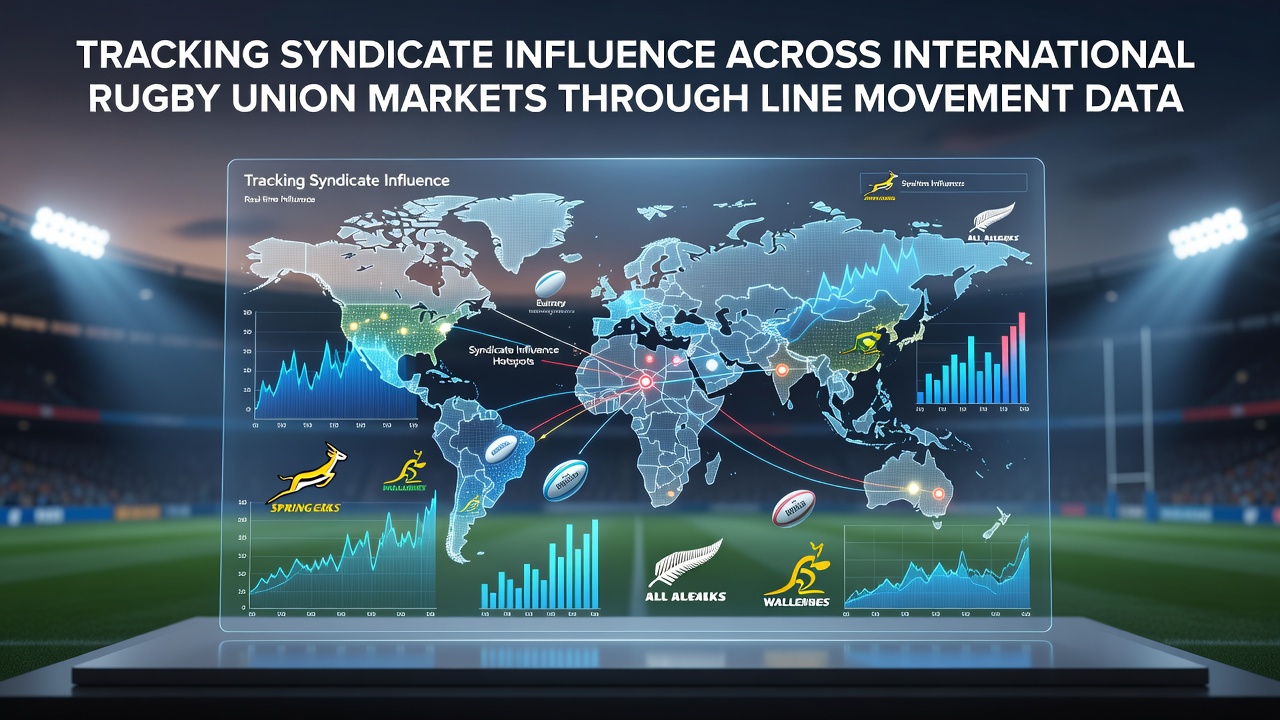
Line movement data in rugby union betting markets reveals patterns that observers track to identify potential syndicate activity, and analysts examine shifts in odds across major competitions including the Six Nations, Rugby Championship, and Super Rugby Pacific. These movements occur when large wagers enter the market and bookmakers adjust lines accordingly, which creates measurable changes in point spreads, totals, and moneyline odds that researchers monitor through specialized software platforms.
Line Movement Mechanics in Rugby Markets
Bookmakers set initial lines based on statistical models that incorporate team form, player availability, and historical performance metrics, yet syndicate bets often arrive early enough to force rapid adjustments before public money flows in. Data providers record these shifts in real time across multiple jurisdictions, and patterns emerge when lines move against the opening price by more than a specified threshold within narrow time windows. Observers note that rugby union presents unique challenges because matches feature lower scoring volumes compared to other codes, which amplifies the impact of single late tries or penalty kicks on final margins.
September 2026 brought heightened attention to these dynamics during the Rugby Championship window, when bookmakers reported unusual clustering of bets on underdog sides in two fixtures involving the Springboks. Line movement logs showed totals dropping by three points within forty minutes of market opening in one contest, while spreads tightened in another despite no reported team news, prompting analysts to flag the activity for further review.
Identifying Syndicate Signatures Through Data
Researchers distinguish syndicate influence from recreational betting by examining volume spikes that coincide with line reversals rather than gradual drifts driven by public action. A typical signature includes substantial wagers placed simultaneously across several operators followed by consistent movement in the same direction, and studies of historical data sets confirm these clusters appear more frequently ahead of international windows than domestic league rounds. Those who monitor the markets point to correlation between such movements and subsequent results where underdogs cover or totals land on the side that attracted early money.
Tools employed for this analysis aggregate feed data from Asian, European, and Australian exchanges, allowing cross-market comparison that highlights discrepancies where syndicates may have targeted softer lines. Figures from these platforms show that rugby union markets experience line movement rates approximately fifteen percent lower than football equivalents, yet the magnitude of individual shifts tends to be larger when professional groups engage.

Regional Variations Across Global Markets
Markets in Australia and New Zealand display faster incorporation of information into lines compared with some European operators, which creates opportunities for syndicates to exploit timing differences. According to reports compiled by the Australian Institute of Criminology, cross-border betting flows in rugby union increased notably between 2023 and 2025, with line movement data indicating coordinated activity spanning multiple time zones. Observers record that New Zealand bookmakers adjust totals more aggressively on high-scoring games involving Pacific Island nations, while South African operators show greater sensitivity to forward pack statistics in domestic derbies that spill into international fixtures.
European markets, particularly those tied to the United Rugby Championship, exhibit distinct movement profiles where early money often targets handicap lines rather than totals. Data aggregated across operators reveals that syndicates frequently split wagers across related props and player performance markets, which generates secondary line adjustments that analysts use to confirm primary signals. The International Betting Integrity Association documented several instances in 2025 where rugby union line movements preceded anomalous results, though the organization stressed that correlation alone does not establish causation without additional investigative layers.
Practical Applications for Market Monitors
Professionals who track these signals combine line movement alerts with injury reports, weather data, and referee assignments to build layered models, and the resulting frameworks help separate noise from actionable patterns. One documented approach involves setting movement thresholds calibrated to average daily volume for each competition, then flagging outliers that exceed two standard deviations from historical norms. This method captured several notable instances during the 2025 British and Irish Lions tour where lines shifted sharply on matches played in Australia, aligning with later reports of concentrated betting activity from offshore groups.
September 2026 data continues to feed these models, as the conclusion of the northern hemisphere summer tours provides fresh sample sets for validation. Analysts compare movement timelines against final score margins and find that markets exhibiting early, sustained shifts in one direction have produced measurable edges for those positioned before public correction occurs. The process requires ongoing refinement because bookmakers implement their own countermeasures, including stake restrictions and delayed line updates, which alters the observable data landscape over time.
Conclusion
Line movement analysis offers one window into syndicate behavior within rugby union betting markets, and continued collection of granular data across international competitions supports more precise identification of coordinated activity. Observers maintain that these techniques remain most effective when combined with broader integrity monitoring rather than used in isolation, and the expanding availability of real-time feeds from diverse jurisdictions strengthens the overall picture available to researchers and regulators alike.