Weather's Whisper: Interpreting Forecast Shifts for Over/Under Totals in MLS Encounters
Ben Flores · Sep 5, 2026
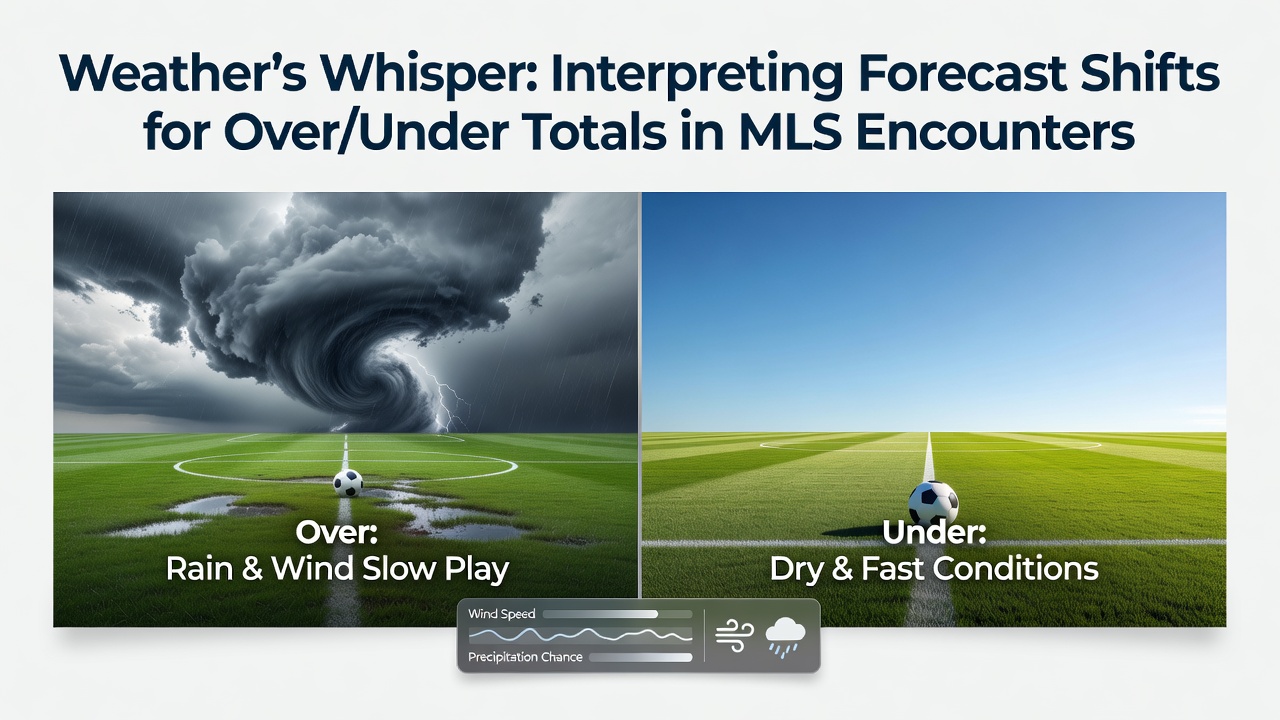
Weather's Whisper: Interpreting Forecast Shifts for Over/Under Totals in MLS Encounters
Weather patterns exert measurable influence on MLS match outcomes, particularly when bettors examine over/under totals for goals scored. Forecasters track shifts in precipitation, wind speed, temperature, and humidity that alter pitch conditions and player movement throughout the ninety minutes. Data collected across multiple seasons shows these variables correlate with scoring rates in ways that shift totals markets before kickoff.
Key Meteorological Factors in MLS Matches
Precipitation stands out as a primary driver because rain softens the pitch surface and changes how the ball travels across the turf. Studies from the National Oceanic and Atmospheric Administration indicate that even moderate rainfall reduces ball speed by up to fifteen percent on natural grass fields common in MLS venues. Wind gusts above twenty kilometers per hour further complicate long passes and set pieces, which often account for a significant portion of goals in league play. Temperature swings also matter. When readings drop below fifteen degrees Celsius, muscle elasticity decreases and fatigue sets in earlier, according to sports physiology research published by Canadian universities tracking outdoor leagues.
Forecast Shifts and Market Reactions
Betting lines move when updated forecasts diverge from initial projections. A morning outlook calling for clear skies that later incorporates scattered showers prompts oddsmakers to adjust totals downward within hours. Observers note that these adjustments occur most frequently during the shoulder months when weather systems transition rapidly. September 2026 schedules place several eastern conference matches in periods where Atlantic storm tracks historically bring sudden changes, creating windows where line movement precedes public awareness of updated models.
Humidity levels above seventy percent compound heat effects during late afternoon kickoffs. Players experience elevated core temperatures that reduce sprint frequency and recovery between high-intensity efforts. Figures compiled from league tracking systems reveal goal tallies drop an average of 0.4 per match under those conditions compared with drier environments. Analysts who monitor hourly updates from multiple weather services identify these patterns ahead of totals markets settling.

Regional Variations Across MLS Venues
Stadiums in different climates respond uniquely to the same weather event. West coast venues with firmer artificial surfaces maintain higher ball speeds even during light drizzle, whereas midwestern fields with natural grass see sharper reductions in scoring. Researchers at the University of Colorado examined five years of match data and found that wind direction relative to pitch orientation produces statistically significant differences in corner kick conversion rates. Eastern teams playing in coastal stadiums encounter marine layer effects that increase evening dew formation and further slow surface play.
Those who review historical box scores alongside archived forecast archives identify recurring sequences. A rapid temperature drop combined with rising humidity often precedes under results in matches between teams reliant on transitional attacking styles. Conversely, stable high-pressure systems correlate with elevated goal counts when both sides favor possession-based approaches that exploit open space.
Data Sources and Analytical Approaches
Betting syndicates integrate real-time feeds from Environment and Climate Change Canada alongside U.S. models to refine projections. Public data sets released by the league's performance tracking partners allow independent verification of scoring trends under specific conditions. One study released through an academic sports science journal cross-referenced radar imagery with minute-by-minute event data, demonstrating that matches played under steady light rain produced fewer shots on target after the sixtieth minute compared with dry equivalents.
Pattern recognition improves when analysts segment data by time of day and geographic cluster rather than treating all MLS fixtures uniformly. Venues in the Pacific Northwest show different sensitivities to wind than those in the Southwest because of prevailing weather regimes. September 2026 fixtures scheduled during typical hurricane season remnants offer additional data points for refining these models as forecasts evolve.
Conclusion
Forecast interpretation for MLS over/under totals rests on documented relationships between atmospheric conditions and match statistics. Multiple agencies supply the raw meteorological inputs, while league tracking systems provide the performance outputs that confirm or contradict initial expectations. Those who combine hourly updates with venue-specific historical records position themselves to recognize when lines have not yet fully incorporated the latest shifts. Continued accumulation of granular data across future seasons will further clarify these connections without requiring subjective judgment.