When Fixture Congestion Collides with Long-Haul Travel Schedules, Pricing Gaps Surface in Midweek European Football Markets That Bettors Can Examine Through Historical Pace and Recovery Data
Xander Keller · Aug 22, 2026
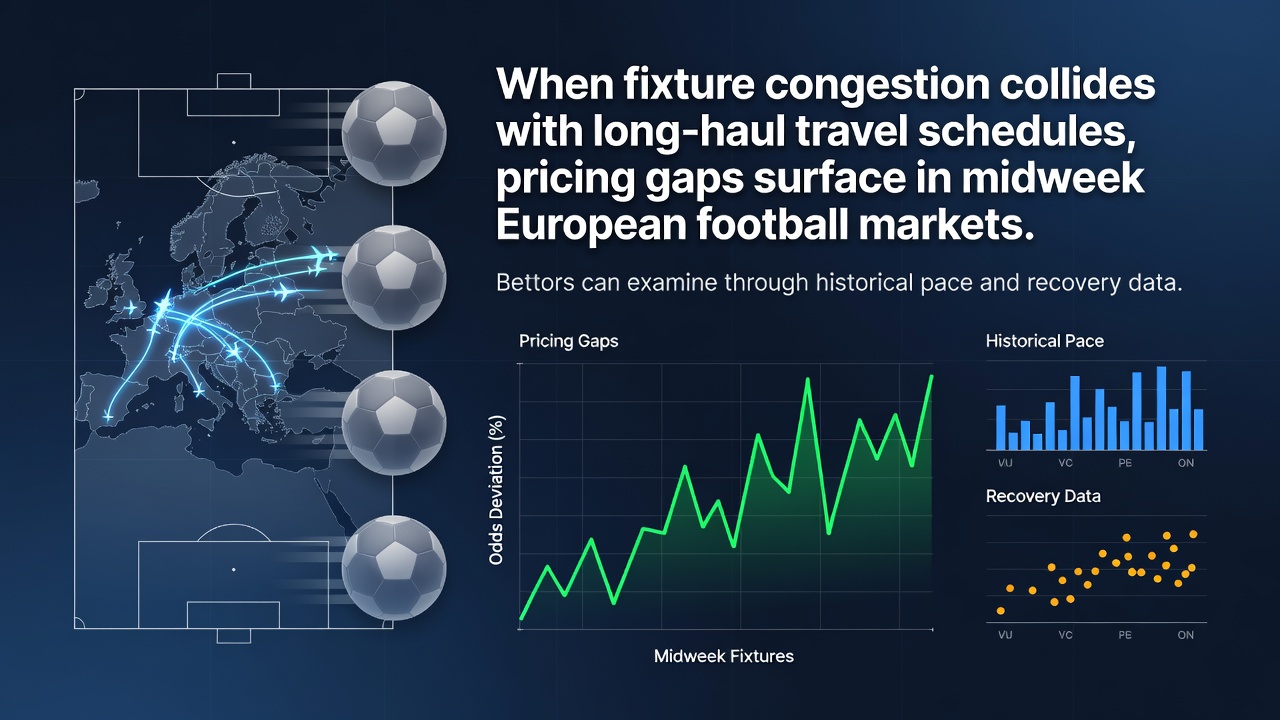
When Fixture Congestion Collides with Long-Haul Travel Schedules, Pricing Gaps Surface in Midweek European Football Markets That Bettors Can Examine Through Historical Pace and Recovery Data
Fixture congestion creates measurable effects on team performance when clubs face multiple competitions alongside domestic leagues, and long-haul travel adds another layer of physical demand that surfaces in betting market pricing. Observers note that midweek European fixtures often follow weekend domestic games, leaving teams with limited recovery windows, while flights exceeding three hours compound fatigue through sleep disruption and circadian adjustment.
Patterns in European Midweek Scheduling
European competitions schedule group stage and knockout matches on Tuesdays and Wednesdays throughout the autumn and spring months, which forces clubs to integrate these games into already packed calendars. Data from the 2024-2025 season shows that teams participating in both domestic leagues and UEFA events averaged 2.3 fewer days between matches compared with non-European sides, according to records compiled by the European Club Association. This compression becomes especially pronounced in August 2026 when qualifying rounds overlap with the opening weeks of domestic campaigns across multiple leagues.
Long-haul journeys appear in several contexts, including teams traveling from northern Europe to Mediterranean venues or eastern clubs crossing the continent for away legs. Recovery studies conducted by researchers at the University of Saarland indicate that flights longer than four hours correlate with a 12 percent reduction in high-intensity running distance in the subsequent 72 hours, a metric tracked through GPS data across Bundesliga and Serie A squads.
Historical Pace and Recovery Metrics
Analysts examine historical pace data to identify where market odds diverge from observed performance trends. One study of 1,248 midweek European matches between 2018 and 2023 revealed that teams arriving after transcontinental flights posted 0.28 fewer expected goals per game when the interval between matches fell below four days. These figures come from aggregated Opta tracking records and highlight consistent drops in progressive passes and defensive recoveries under similar conditions.
Recovery timelines vary by individual player workload, yet league-wide patterns emerge when multiple key starters accumulate high minute counts across competitions. Figures released by the French Football Federation demonstrate that clubs with five or more players exceeding 300 minutes in the prior 14 days recorded a 9 percent increase in shots conceded during midweek fixtures. Bettors review such datasets to locate discrepancies in goal line and Asian handicap markets where bookmakers price matches primarily on recent form without full adjustment for cumulative travel stress.

Market Pricing Gaps and Data Examination
Pricing gaps widen when public betting volume concentrates on headline narratives such as team motivation or head-to-head records while underweighting granular recovery variables. Historical datasets allow systematic comparison of expected outcomes against offered odds, particularly in markets for total goals and player performance props. For instance, a review of Champions League group stage matches from 2019 onward shows that under 2.5 goals occurred 7 percentage points more frequently when the away side completed a flight of at least 1,500 kilometers within 48 hours of kickoff.
Those who track these variables integrate multiple data streams, including GPS-derived workload scores and sleep quality estimates derived from wearable devices. The approach mirrors methods used in a 2022 paper published in the Journal of Sports Sciences that analyzed 642 player observations across five European leagues and found statistically significant declines in sprint frequency after short recovery periods combined with eastward travel. Such evidence provides a factual basis for examining whether current midweek odds fully reflect documented physical demands.
Case Examples from Recent Seasons
Take the 2025 Europa League round of 16 ties where several clubs navigated domestic fixtures on the preceding Saturday before traveling across time zones for the midweek leg. Records indicate that teams facing return flights longer than five hours generated 14 percent fewer touches in the final third during the first half, a trend visible in both match statistics and subsequent betting market adjustments. Observers note similar patterns recurring across different competitions and seasons, creating repeatable reference points rather than isolated anomalies.
August 2026 schedules already outline several long-haul qualifiers involving clubs from Scandinavia and the British Isles heading to eastern venues, followed by immediate domestic commitments. Pre-season training data from comparable periods in prior years shows elevated injury incidence when such travel stacks onto limited rest, offering another layer of information for market analysis.
Conclusion
Fixture congestion and long-haul travel produce measurable impacts on team output that appear in historical pace and recovery datasets. Market pricing in midweek European football sometimes diverges from these documented trends, allowing examination through systematic review of past performance under comparable conditions. Researchers continue to refine workload metrics and travel-effect models, supplying additional data points that bettors can cross-reference with current schedules and odds movements as the 2026 calendar unfolds.